With our inspiring blog articles, articles about our products, guides and much more, you are always up to date on the latest trends, insights and information in the mobility industry.
It's not *if* you charge, but *when*: This is precisely where the key to efficient e-mobility lies. With chargeSmart, we intelligently connect mobility and energy – for lower costs, fewer peak loads, and smarter fleets.
Home charging stations initially look like a large investment. However, our analysis shows that lower and more stable electricity prices at home significantly reduce overall costs. After just around 2.5 years, the infrastructure pays off — after that, every additional operating period becomes a financial advantage. Home charging is therefore a central lever for economical e-fleet management.
Many companies want or have already electrified their fleets — but charging often lacks full cost transparency. Our data shows: High price variance and additional charges for public charging make planning and comparability difficult, especially without home charging. Home charging provides a complete, reliable cost picture across all charging locations for the first time.
Home charging is an underrated efficiency and cost lever in e-mobility. Our data shows: It is not the price of electricity, but habits that determine charging behavior — and it is precisely this diversity that makes fair reimbursement demanding. The report shows why flat rates necessarily lead to over and under compensation and how individual, data-based models such as ChargeHome enable real fairness, transparency and cost efficiency for drivers and fleets.
Our ChargeHome product uses vehicle data instead of station data and thus enables accurate, hardware-independent billing of charging processes at home - even at several private addresses. Companies thus benefit from an automated, transparent process, and drivers in turn benefit from maximum flexibility. The article shows why vehicle-based data clearly outperforms traditional solutions.
With the increasing electrification of company fleets, the workplace is becoming a central charging location. But our analyses show that there is often a big gap between when charging — and when it would make sense.
Anyone who wants to charge publicly knows it: compare apps, check tariffs, check fees - and yet you feel like you're in a jungle of tariffs. We'll show you why it's worthwhile to control all your charging processes with just one app.
How does the availability of charging infrastructure influence the charging behavior of e-car drivers? Our current evaluation of almost 1000 drivers provides exciting insights — particularly for fleets.
Mazda, together with autoSense AG, is launching “Mazda Charging” across Europe. The aim is an easier and smarter driving experience for all Mazda electric vehicle drivers across Europe.
chargeSmart, the smart charging solution from autoSense, automatically optimizes charging processes, reduces charging costs for users by up to 30% and works directly via the vehicles, regardless of the existing charging infrastructure.
autoSense AG and Helion chargeON have announced their merger. The aim of the merger is to combine the know-how of both companies and expand the range of charging solutions for electric vehicle fleet customers.
Thanks to the combined know-how and regionally based locations, Helion is able to professionally and competently meet all requirements relating to photovoltaics, energy storage, heat pumps and electric mobility throughout Switzerland.
The EU's European Green Deal calls for a reduction in greenhouse gas emissions of at least 55% by 2030 compared to 1990 and climate neutrality in Europe by 2050. What is the state of electric mobility in Europe? Our analysis shows that.
What does the chargeFleet portal offer Fleet Managers?
Fleet managers receive a central overview of all charging processes, can manage users and driver apps, and use clear statistics to monitor and control charging processes.
Can charging processes also be carried out without a physical card?
Yes, charging can be done via the app without a physical card. As an option, the driver can also use an RFID charging card, which is particularly practical in areas with weak network coverage, such as underground car parks.
What do I do if I have lost my charging card or can no longer find it?
You can order a new charging card. Before you can use your new card, however, it must be activated again. To prevent unauthorized use of the lost charging card, please contact our customer support to have the card blocked. If you have lost your employer's or a leasing company's charging card, sit down with the relevant company and then discuss the next steps.
How can I order a charging card?
If required, you can order your charging card free of charge once. As soon as you have received your card, you can store and load it in the chargeOn app.
Can I also charge abroad?
Yes, the chargeON app and charging card can also be used abroad. You can charge your car at more than 700,000 stations throughout Europe (coverage approx. 90%).
What are the charging capacities of AC/DC plugs in various vehicles?
The maximum charging capacity varies depending on the vehicle brand and model. Higher quality models often support higher charging capacities. However, the actual charging capacity can also be influenced by factors such as the charge level of the battery and the ambient temperature.
It's not *if* you charge, but *when*: This is precisely where the key to efficient e-mobility lies. With chargeSmart, we intelligently connect mobility and energy – for lower costs, fewer peak loads, and smarter fleets.
Leah Knecht
2026-05-13
The moment every fleet manager knows
7:30 AM. The office parking lot fills up. Employees arrive, get out, and plug in their electric vehicles. A perfectly normal start to the day, and precisely where the problem begins.
Because all vehicles charge simultaneously. Exactly when electricity demand and prices are highest. This remains invisible to drivers. For the company, it becomes expensive.
What looks like efficiency is, in reality, an uncoordinated peak load – every single morning.
The real problem: Energy & Mobility don't speak the same language
Mobility follows the daily work routine. Energy follows supply, demand, and grid load. And this is precisely where the gap arises.
While vehicles charge exactly when they arrive, electricity is scarce and expensive during these times. At the same time, there would be sufficient capacity throughout the day or at night, and it would be significantly cheaper, more stable, and more efficient. But these time windows remain unused.
And this is precisely the fallacy: companies today optimize their fleet – but not its energy behavior.
It's not about whether charging happens. But when.
And this "when" makes the difference between a cost factor and a competitive advantage.
What if your fleet didn't just charge as soon as a vehicle is plugged in, but precisely when it's most economically and energetically sensible? This is exactly where chargeSmart comes in.
chargeSmart brings both worlds together
Instead of relying on the randomness of the daily work routine, chargeSmart for the first time connects what was previously separate: mobility and energy.
Imagine your vehicles had an intelligent assistant in the background. One that knows exactly when a vehicle truly needs energy and when it doesn't.
That's exactly what chargeSmart is. It's not a charging station, but software that makes your existing charging infrastructure smarter – automatically, in the background, and without any extra effort for your drivers.
How chargeSmart works – simply explained
Smart charging often sounds complex, but it's based on a simple principle: Not every vehicle needs to charge immediately. What's crucial is when the energy is actually needed.
In the background, the software continuously analyzes your fleet's situation: when vehicles arrive, how much energy they need, and when they must be back in operation. This reveals a central element: available flexibility. Because in most cases, vehicles remain plugged in longer than they actually need to charge.
chargeSmart specifically utilizes this leeway.
Instead of starting the charging process immediately, charging sessions are deliberately shifted to time windows when electricity is cheaper and the grid is less strained. Typically, these are hours outside of classic peak loads, such as at night or during phases of high energy availability with high solar production.
In the background, chargeSmart combines various data sources:
The individual charging behavior of the vehicles
Typical locations and charging points
As well as electricity price information for the coming hours.
Based on this, chargeSmart automatically plans and controls charging processes. Vehicles no longer charge upon arrival, but at the most economically sensible time.
A crucial difference from other solutions lies in the type of control: namely, via the vehicle and its battery, not via the charging station.
Specifically, this means:
Charging processes can be started, paused, or shifted independently of the infrastructure
No dependence on specific charging points or electricity meters
Uniform control across different locations.
In contrast, classic dynamic load management is limited to distributing available power within a building to prevent overloads. chargeSmart goes a crucial step further: it actively shifts the charging process itself into more favorable time windows, thereby optimizing not only the infrastructure but, above all, energy procurement.
Currently, this control is unidirectional, meaning electricity flows specifically into the vehicles at the optimal time. With future developments like Vehicle-to-Grid (V2G), this principle can be further expanded. Vehicles could then store energy and feed it back into the grid when needed (bi-directional charging), creating additional economic potential.
Further Use Cases: How chargeSmart works in practice
Besides the classic morning rush at the office, there are numerous other situations where chargeSmart can unleash its full potential.
Depot/Logistics – Evening Return
In logistics or service fleets, vehicles typically return to the depot in the late afternoon or evening. Without smart control, they immediately begin charging – precisely during the phase when general electricity demand rises sharply, as many households simultaneously cook, use appliances, and draw power.
chargeSmart recognizes that the vehicles won't be needed again until the next morning. The charging process is therefore deliberately delayed and shifted to the night, when demand decreases and electricity is significantly cheaper.
Vehicles charge automatically overnight, without manual intervention, and are fully ready for use the next morning.
The effect:
Shifting energy consumption to inexpensive night hours
Significant reduction in electricity costs
Relief for the power grid during critical times
This creates a direct financial advantage for companies, without impacting fleet readiness.
Small Business with PV System – Optimally Utilizing Own Energy
For smaller businesses with their own photovoltaic system, there's particular potential in utilizing self-generated electricity. However, without smart control, this is often not optimally used, as vehicles charge during times when there is no or only low solar production.
chargeSmart recognizes this dynamic and specifically shifts charging processes to time windows with high solar production – typically around midday. Vehicles thus preferentially charge when their own electricity is available.
The effect:
Maximizing self-consumption
Reducing reliance on expensive grid electricity
Improved economic efficiency of the PV system
For the company, this means greater independence from the energy market and significantly more efficient use of its own resources.
Business Impact: What does this mean in practice?
For companies and fleet managers, it all comes down to one simple question: Is it economically worthwhile?
The short answer: Yes, and it already is today. With additional upside potential.
Measurable Savings – with further optimization potential
To illustrate the effect of chargeSmart, the charging behavior of a real customer was analyzed and compared across three different scenarios:
Naive: Charging starts immediately upon plugging in
Balanced (chargeSmart): Smart control based on behavior and price forecasts
Optimal: Charging exclusively during the most favorable time windows
The result of this case study:
chargeSmart already reduces energy costs by approximately 3% compared to naive charging
At the same time, there is an additional potential of about 7% to reach the theoretical optimum.
The total optimization potential is therefore around 10%.
Important context: The analysis is currently based on the first two winter months. As electricity prices and, in particular, the availability of favorable time windows change in spring and summer, we expect the savings potential to further improve in the coming months.
Why this is more than it sounds
At first glance, 3% savings might seem modest. In reality, however, they are highly significant. This is because these savings are achieved entirely without any behavioral changes from drivers, without any loss of efficiency for the driver, and equally crucially, without additional effort or investment in charging infrastructure. Since chargeSmart controls directly via the vehicle, no adjustments to existing charging stations or installations are necessary.
At the same time, the savings apply to every single charging session and scale automatically with the size of the fleet. This means it's not a one-time optimization, but a continuously effective lever that unfolds further with each use.
Even more crucial, however, is looking at the remaining potential: The gap to the theoretical optimum clearly shows that chargeSmart is not a static system but is continuously evolving. A portion of the savings is already being realized today, while an additional portion represents a planned upside in further development.
The crucial lever: Downtime = Money
The analysis also shows: The longer vehicles are plugged in, the higher the savings.
Specifically, this means:
Office fleets with long downtimes → consistently stable savings
Depot and logistics fleets → high optimization potential overnight
Mixed fleets → automatic utilization of existing flexibility
Electromobility is growing rapidly, and at the same time, the strain on power grids is increasing. Smart charging is thus no longer a luxury, but a necessity. Because with increasing electrification, a central question fundamentally changes: no longer just where charging happens, but above all, when.
Today, many charging processes start exactly when vehicles arrive – in the morning at the office, in the evening at home, or simultaneously at the depot. However, electricity demand is often already high at precisely these times. This leads to peak loads, higher energy costs, and additional strain on the grid infrastructure.
The future of electromobility therefore lies in intelligent temporal control. Vehicles no longer simply charge immediately, but specifically during time windows when electricity is cheaper and more readily available – without restricting mobility.
Fleets thus become an active part of the energy system. They can shift loads, relieve power grids, and optimize energy costs. A simple charging process thereby transforms into an intelligent energy decision, with benefits for companies, drivers, and the entire energy system.
Together towards an intelligent energy future
The development of chargeSmart shows how closely electromobility and the energy system will grow together in the future. Intelligent control of charging processes will thus become a central building block for a stable, efficient, and economical energy system.
The chargeSmart project is part of the program "Ladenpunkt" supported by the Swiss Federal Office of Energy. The program promotes practical solutions that advance the expansion and intelligent use of charging infrastructure for electromobility in Switzerland.
Is charging at home really worthwhile? Why home charging infrastructure is becoming a game changer for fleets
Home charging stations initially look like a large investment. However, our analysis shows that lower and more stable electricity prices at home significantly reduce overall costs. After just around 2.5 years, the infrastructure pays off — after that, every additional operating period becomes a financial advantage. Home charging is therefore a central lever for economical e-fleet management.
2026-02-18
The electrification of corporate fleets is no longer a vision of the future. Many companies have already introduced electric vehicles and gained initial experience. But one crucial question often remains unanswered: Is investing in charging infrastructure at home worthwhile for employees or is public charging or charging at work sufficient?
At first glance, the investment costs seem high. One charging station per employee quickly means several thousand francs per vehicle. However, our analysis shows a different picture: Over time, charging at home is not only more convenient, but also has a clear economic advantage.
Charging at home vs. charging publicly: Two completely different cost worlds
In our previous article, we already talked about the price volatility of public charging stations. Here is a short summary again.
At home:
Average cost: approx. 0.30 CHF/kWh
High predictability
Hardly any price volatility
Public charging:
0.28 CHF/kWh up to over 1.00 CHF/kWh
Massive price range
Depending on provider, location, charging capacity and time
Low predictability
This price range for public shops is not an outlier — it is part of everyday life. This volatility not only makes budget planning difficult, but also leads to significantly higher overall costs in the long term.
Charging behavior is massively changing the cost structure
Just as important as the price itself is the question of where you actually charge. As soon as employees get their own charging station at home, charging behavior changes significantly.
Previous analyses show the following charging patterns:
With a charging station at home:
69% Home
19% Work
12% Public
At home without a charging station:
54% Public
46% Work
This shift will have a direct impact on the cost structure and this is exactly where the decisive lever lies.
A direct comparison of two fleets
To make this effect tangible, let's look at two identical fleets of 50 vehicles each — calculated using the example of a Škoda Enyaq with an annual mileage of 20,000 kilometers per vehicle.
Fleet A is optimised: All employees have their own charging station at home. Fleet B, on the other hand, is not optimised: There is no home charging solution; charging is mainly carried out publicly or at the company location. The difference between the two fleets therefore lies exclusively in the charging infrastructure — not in the vehicles or their use.
A driver in the optimised fleet charges the majority of his energy requirements at home or at work. Around 88 percent of charging processes take place there, at an average cost of around 0.32 CHF per kWh. Public charging stations account for only a small share of 12 percent. This results in annual charging costs of around 1,698 CHF.
A driver of the unoptimized fleet, on the other hand, is significantly more reliant on public charging points, as no home charging station is available. Its annual charging costs are correspondingly higher: They amount to around 2,490 CHF per year.
The cost trend over 5 years
Installing home charging stations initially requires a noticeable initial investment. With a fleet of 50 vehicles, this quickly adds up to a six-figure sum.
As an example, the following simulation looks at one driver per fleet. Fleet A starts with higher initial costs due to the investment of around 2,000 CHF per home charging station — assuming that in practice, companies usually do not cover the full installation costs (approx. 3,500 CHF). In fact, we see subsidies ranging from 1,000 to 2,000 CHF per employee for many company fleets. The simulation is therefore based on a realistic experience value of 2,000 CHF.
With regard to ongoing energy costs, however, a clear trend quickly emerges. Due to the high proportion of home and business loads, the optimised Fleet A significantly reduces its operating costs and makes up for the initial cost disadvantage year after year.
After a few years, the cumulative total costs of the fleet with a home charging station fall below those of the fleet without the appropriate infrastructure. The illustration visualizes this process and the time of amortization. Starting at around 2.52 years of age, each additional operating period results in a financial advantage for the company.
Why the investment pays off
The economic advantage results from several interacting effects. Expensive public charging processes are being reduced, while cheap and stable home charging rates dominate. At the same time, the predictability of energy costs increases significantly, which is a strategic advantage, particularly for large fleets.
There are also operational effects: Employees save time because they do not have to actively search for charging stations and satisfaction increases due to the convenience of charging at home. Optimization therefore means not only reducing costs, but also increasing efficiency.
A strategic investment instead of additional costs
What initially seems like a large expenditure turns out to be a strategic investment in the long term. Fleets with home charging infrastructure benefit from lower overall costs, greater planning security and more efficient processes.
The real question is therefore no longer whether home charging stations are worthwhile, but how quickly companies want to benefit from this optimization.
New: ROI calculator for your fleet
Would you also like to know how much you can save? With our ROI calculator, you can save costs and reduce CO₂ when switching to electric mobility with our intelligent charging solutions.
With the ROI calculator, you can calculate your savings using the following data:
number of vehicles
Share Home/Work/Public
investment costs
New year - new e-fleet management?
Many companies want or have already electrified their fleets — but charging often lacks full cost transparency. Our data shows: High price variance and additional charges for public charging make planning and comparability difficult, especially without home charging. Home charging provides a complete, reliable cost picture across all charging locations for the first time.
2026-01-28
Start the new year with new ideas about fleet management — where are real cost savings hidden?
The electrification of fleets is no longer an issue of the future. Many companies are already in the thick of it: E-vehicles have been ordered, charging cards have been distributed, and initial experience has been gained. And yet, for many fleet managers, one key question remains unanswered: Are we really in control of our overall costs or are we just feeling good about it?
When it comes to charging, it's easy to see that the decisive factor is not just where charging is carried out, but at what prices — and how well these costs can be planned.
Fleet without home charging: a manageable concept, a complex life
Companies without a home charging solution usually end up with a similar setup:
Charging at the company location (work charging), if available
Charging on the go at public stations
On paper, it sounds clearly structured. In practice, however, the charging data shows a different picture, especially when it comes to the subject Cost variance.
Work charging: relatively stable, easy to plan
For medium-sized companies, the price of electricity in business is often within a clearly defined range. An example from the analysis: The median price of a typical business tariff is around Rp 25. /kWh (C3, Elcom), with a range of approx. 8.5 to 40.9 Rp. /kWh
For female fleet managers, this means: manageable fluctuations, reliable calculation.
Public charging: large bandwidth, low predictability
The situation is completely different when it comes to public shops. Here, the data show a significantly higher price variance: from 0.28 CHF/kWh to over 1.00 CHF/kWh and more. This range is not an outlier, but everyday life — regardless of provider, location, charging capacity and time.
But that's not all: When it comes to public charging, the kWh price is often not the only cost factor.
Depending on the station and tariff, the following may also apply:
Time charges (e.g. per minute after a certain downtime or from the start
Fair use fees when vehicles stay connected “too long”
Starting fees, regardless of the amount of energy charged
The result: Two charging processes with a similar kWh volume can result in completely different total costs in the end, simply due to the tariff structure.
For female fleet managers, this means:
The total cost of charging can hardly be estimated in advance
Costs fluctuate not only because of the price of electricity, but also because of additional charges
A clean comparability between vehicles, drivers or months is significantly more difficult
predictability? Barely given.
Especially in fleets with a high proportion of public charging processes, this creates a cost reality that is difficult to predict.
What our data also shows: If you don't have home charging, you charge publicly more often
Particularly exciting: Drivers without a home charging station charge more publicly than in stores, where charging is cheaper.
That means:
More charging on the go
More price variance and more price uncertainty
More different statements
Especially among employees working in the field or with longer commuting distances, it is clear that a large part of the energy does not flow at the company location, but where prices fluctuate the most.
For fleet managers, this not only increases overall costs, but above all the unpredictability of overall costs.
Fleet with home charging: the full picture of costs
With home charging — and a clean solution like ChargeHome — the perspective is shifting. Because suddenly the charging location with the greatest potential is also included in the bill: the employees' homes.
What's changing as a result:
Cheaper and more stable energy prices compared to public charging
Significantly lower price variance than with public charging
Fewer public charging processes, fewer detours, less loss of time.
And above all: The total costs of the fleet are really visible for the first time.
Transparency instead of gut feeling — real added value for fleet managers
The biggest benefit of ChargeHome lies not only in the lower electricity price, but also in the transparent total cost statement:
Exact recording of the charged kWh at home
Fair, consumption-based compensation to employees
Clear, comprehensible costs per vehicle and per driver
No flat rates, no Excel lists, no discussions at the end of the month. Instead, a clean data base that fleet managers can work with — and that is also convincing internally, for example in finance, controlling or management.
Conclusion: If you want to save money, you have to think holistically
Fleets without home charging often pay more than they expect — not necessarily because of high electricity prices, but because of a lack of predictability, high price variance and lack of transparency. At first glance, public charging appears flexible and uncomplicated, but in practice it eludes reliable cost management.
Fleets with home charging and a solution such as ChargeHome, on the other hand, gain decisive control:
Transparency across all charging locations
predictability of energy prices, infrastructure and billing
Comparability between vehicles, drivers and time periods
Acceptance among employees through fair, consumption-based compensation
This turns e-fleet management from gut feeling into a reliable basis for decision-making — for fleet management, finance and executive management.
Outlook: “But charging infrastructure is so expensive” — is that really true?
A common counterargument remains: “But charging infrastructure for all employees costs a fortune.” We'll take a closer look in the next blog post.
We analyze:
What additional costs actually arise from charging infrastructure at home and at work
Why these costs are often overestimated
And why a fleet travels cheaper even when every employee has their own charging station.
AutoSense and Conneqtech partnership
autoSense and Conneqtech partner to offer customers more innovation, security and scalability
2026-02-09
autoSense and Conneqtech partner to offer customers more innovation, security and scalability
Zürich, February 9, 2026
autoSense AG, part of AMAG Group AG, and Conneqtech have entered into a strategic partnership to strengthen their joint position on the European market for connected mobility. The partnership combines Conneqtech's proven telematics expertise with autoSense's innovative EV charging technology and offers autoSense and Conneqtech customers greater continuity, innovation and scalability. The collaboration creates new opportunities for both sides and supports Conneqtech's growth ambitions in Europe.
As part of this collaboration, Conneqtech will continue autoSense's telematics business, including service for existing customers. These activities will be based at Conneqtech Switzerland Ltd., with the existing team remaining at the well-known location in Zurich. Based on this structure, both companies will continue to support customers in Switzerland and the DACH region with high-quality telematics and fleet management services.
The partnership is fully focused on increasing value for autoSense & Conneqtech customers. In addition to ensuring continuity and service quality and maintaining multilingual support, it offers customers new products and a wider portfolio that allows them to gain even more insights from their fleets to make their business processes more efficient.
At the same time, autoSense is increasingly focusing on the development of its advanced EV charging software for fleets. This creates new opportunities to organise electric driving and charging more intelligently, safely and efficiently.
Jaap Vossen, CEO of autoSense AG:
“Our customers are at the center of this collaboration. We are confident that this partnership will not only provide stability but also create new growth opportunities for our valued enterprise customers, while allowing us to focus on developing and offering our charging solutions. ”
Matthijs van Eijzeren, CEO of Conneqtech:
“We are proud to have won the trust of autoSense and AMAG. Thanks to our experience with scalable telematics solutions, we can offer our customers the best possible service now and in the future with reliable technology, personal support and international coverage. ”
Martin Everts, managing director of AMAG Energy & Mobility:
“At AMAG, we firmly believe in partnerships that create added value for customers and accelerate the energy revolution. The collaboration with Conneqtech enables us to strengthen our focus on intelligent charging infrastructure and at the same time offer the telematics business a solid future with a specialized and experienced partner. ”
Step-by-step handover while maintaining local service
The transfer of telematics activities is formally completed and Conneqtech has taken over full management of autoSense's telematics customers. Customers have already been personally informed about this. These activities will continue from Switzerland, and customers will continue to receive the usual quality and support in close collaboration between the teams of both companies to ensure smooth integration with all services that are continuously available both before and after integration.
About autoSense
autoSense AG offers intelligent charging solutions for fleets and drivers of electric vehicles. Our modular platform seamlessly combines charging, billing and fleet management — at work, at home or in public — giving companies complete control and cost transparency. With innovations such as ChargeHome for accurate reimbursement of home charging costs and ChargeSmart, which optimizes charging based on pricing and availability of renewable energy, we help companies cut costs, increase sustainability and simplify the electrification of their fleets.
About Conneqtech
Conneqtech is a Dutch specialist for connected mobility solutions. The company provides scalable telematics, IoT and data platform services to enterprise customers across Europe, with a focus on reliability, innovation and the digital transformation of mobility.
Home charging explained in a new way: Behavior, costs and the path to fair reimbursement
Home charging is an underrated efficiency and cost lever in e-mobility. Our data shows: It is not the price of electricity, but habits that determine charging behavior — and it is precisely this diversity that makes fair reimbursement demanding. The report shows why flat rates necessarily lead to over and under compensation and how individual, data-based models such as ChargeHome enable real fairness, transparency and cost efficiency for drivers and fleets.
2025-12-11
For many e-car drivers, charging at home is the most convenient and at the same time cheapest way to supply their vehicle. But in everyday life, people underestimate the exact potential of this charging location — for drivers, companies and entire fleets.
Our data shows that home charging is not just a convenience factor, but one of the central components of a cost-efficient, fair and sustainably operated e-mobility strategy. In this blog, we look at how much energy is charged at home, why electricity prices have little influence on charging behavior and why package solutions create systematic inequities in the long term.
How much is charged at home? Focus on the amount of energy
To better understand actual charging habits, we look at the average amount of energy charged at home per driver — regardless of the individual electricity price.
The evaluation of 273 fleet drivers over three months shows a very heterogeneous usage:
The average driver loads 212 kWh per month at home.
The distribution is extremely heterogeneous: Many charge rather little, while a few charge very high amounts of energy at home.
A large part is below 150 kWh per month while the top 10% over 400 kWh achieve per month.
But what really drives this behavior?
Habit beats electricity prices: The true driver of charging behavior
A key question is: Does a high energy price at home mean that less is charged?
Our data clearly shows: No.
The analysis of the monthly amount of energy charged in relation to the individual home tariff shows no discernible connection. Drivers with high energy tariffs don't charge less, and drivers with low tariffs don't charge anymore. The spread remains virtually the same across all price levels.
The observation makes it clear that price hardly plays a role for drivers when it comes to home charging.
For many drivers, the pattern is extremely simple and deeply rooted: “I come home, plug in and load.”
This intuitive behavior can also be achieved with data evidence. The analysis of charge states (State of Charge, SOC) At the start and end of charging processes, there is an extremely consistent picture that confirms this habitual pattern.
The evaluations of all home loads show a central pattern: Charging processes often start with a relatively high SOC
A large proportion of drivers start charging at an SOC of 40-60%. This means that there is no wait until the battery is largely empty — it is often plugged in much earlier.
This behavior is in line with what we mentioned “Safety charging”:
Drivers want safe enough range for the next day
You'd rather charge earlier than necessary — not out of rationality, but out of a sense of comfort and security
Range anxiety plays a role, but also pure routine.
In contrast to charging stations at work, “safety charging” at home does not lead to infrastructure bottlenecks. The private charging station belongs to the drivers themselves; no one else is usually dependent on it.
These analyses lead to a clear conclusion: Home charging is driven by habit and mobility patterns, not by the price of electricity.
For fleets, this means:
Users load routinely, not after more economic optimization
Fairness models must reflect real behavior, not theoretical pricing logics
Why fair reimbursement is not trivial — and flat rates always fail
At first glance, refunding home charges seems simple: electricity costs x consumption = done.
But as soon as companies try to implement this approach fairly and uniformly for many drivers, it becomes apparent that there are huge differences behind the uniformity of “home charging” — and it is precisely these that make compensation models highly complex.
Three factors shape this diversity:
Factor 1: No one charges the same — consumption is extremely different
In the fleet, there is an employee who charges barely 80 kWh per month at home because he has short distances. And there is the frequent commuter who regularly needs over 400 kWh due to long commutes. There are dozens of individual profiles in between — 120 kWh, 210 kWh, 650 kWh.
The reality is: The load volumes differ by a factor of 5 to 10.
Factor 2: Electricity prices differ massively — no average assumption is true
Although the average home rate is 0.29 CHF/kWh, the regional spread is enormous:
Some regions charge very cheaply.
Others — such as in Tessin or in Eastern Switzerland — are significantly higher.
A fixed price per kWh therefore necessarily leads to distortions:
Drivers in expensive regions are underpaid.
Drivers in favourable regions are overpaid.
Factor 3: Additional costs such as parking or infrastructure fees
In addition to pure electricity costs, apartment buildings with rental apartments in particular incur additional monthly fees for the charging parking space or the necessary infrastructure — often between 30-50 CHF per month. Many companies assume these additional costs for their employees.
Drivers pay an average of 30-50 CHF per month for the charging park or infrastructure — others do not.
Why flat rate models collapse in this reality
Many companies are considering flat rate solutions (fixed price per kWh or monthly fixed amount) to make reimbursement easier. At first glance, packages seem convenient. But because they did not take into account any of the real differences, they always lead to over- and undercompensation.
This pattern does not arise from errors in the system, but from the nature of the lump sum itself: It smoothes out differences that are in fact huge.
Stay cheaper at home — even with additional costs
Nevertheless, charging at home almost always remains significantly cheaper in practice than charging at public stations. Because even if you include the monthly parking fee, the price advantage clearly remains. This is also shown by a simple calculation example:
Driver charges 200 kWh per month
The electricity price in the village is 0.28 CHF/kWh
If the average price of kWh at public stations is 0.60 CHF/kWh
Total costs: 200 × 0.60 CHF = 120 CHF
Even with an additional cost of 50 CHF, home charging is still cheaper. In this example, the user continues to save 14 CHF per month — a significant saving for large fleets!
Conclusion: Fairness only comes from individuality
A usage-based refund with the actual electricity tariff — as ChargeHome calculates it — is more transparent, fairer and reflects the diversity of real charging patterns.
ChargeHome solves key challenges for many companies:
No more packages
No estimated averages
No admin mountains with Excel lists
No conflicts between drivers and fleet management
The combination of real vehicle data, precise kWh recording and automated billing makes home charging from a “sideshow” a real efficiency and cost driver.
For companies, this means less effort, more fairness, more transparency — and a solution that works for both drivers and fleets.
ChargeHome - What makes our product different
Our ChargeHome product uses vehicle data instead of station data and thus enables accurate, hardware-independent billing of charging processes at home - even at several private addresses. Companies thus benefit from an automated, transparent process, and drivers in turn benefit from maximum flexibility. The article shows why vehicle-based data clearly outperforms traditional solutions.
2025-11-20
Everyday life with charging at home
For many e-car drivers, charging at home is the most convenient and at the same time cheapest way to charge their vehicle. The car is parked in the driveway or underground garage every evening anyway — so why not just plug it in and drive off the next morning with a full battery?
But in practice, billing in particular is often more complicated than it sounds. Not everyone has their own wallbox, and apartment buildings and rental properties often lack the option to install an intelligent charging station. Even where there is a wallbox, the question is: How can electricity costs be calculated correctly — especially if the vehicle is used for business purposes?
For companies, this is a key point in electrifying their fleets: How can charging at home be fairly, simply and transparently integrated into existing billing processes — without additional hardware, without complex installations and regardless of where someone lives or charges?
This is exactly where ChargeHome comes in:
With an approach that doesn't start at the charging station, but directly with the vehicle — and thus makes charging at home and billing as easy as it should be.
Why classic solutions are reaching their limits
This is because most standard solutions for recording charging processes are based on station data — i.e. information that comes directly from the charging station. This sounds obvious at first, but in practice it entails several restrictions.
1. High dependence on “intelligent” charging stations
For billing to be possible, charging processes must be measured precisely and determined via an interface. Simple, non-networked wallboxes and power outlets cannot provide this data. They do not record the amount of charged energy or the vehicle consumption. For this reason, a new “intelligent” charging station is required in many cases. This causes costs, installation costs and results in inconsistent data quality, as different formats and accuracies are used depending on the manufacturer.
2. Restricted freedom of choice for drivers
In apartment buildings or rental properties, it is often not possible to freely select or replace the charging station. In these cases, the charging infrastructure belongs to the administration, the landlord or the condominium owner — or it is part of a jointly installed solution. This means that employees depend on existing hardware, and standard solutions, which necessarily require a specific “intelligent” charging station, simply do not work here.
As a result, large parts of e-car drivers are not taken into account — particularly in urban areas where the proportion of apartment buildings is particularly high. In Switzerland, around 75% of people live in multi-family buildings. For companies with company car fleets, this means that the majority of their employees cannot be covered at all with traditional billing solutions. *
3. Closed system landscapes
Existing charging points, particularly in multi-party properties, are often already integrated into a billing or administration system of an energy supplier or external service provider. In such setups, the OCPP interface — the charging station's central communication connection — is already busy. Since this interface can only be used once, it is difficult to connect to an additional system in parallel.
It would be theoretically possible to integrate the station via a second technical interface such as Modbus. Modbus is an older, widely used industrial protocol that transmits simple measurement values (e.g. current, voltage, temperatures) but provides significantly less information than OCPP. In addition, the use of Modbus requires individual programming per manufacturer or even per model, which in practice is cost-intensive, administratively complex and susceptible to faults. Reliable additional integration into fleet processes is therefore realistically impossible to implement.
4. Limited range of use
Many solutions only work at the main residence. However, anyone who charges at a secondary location, at a holiday home or with friends cannot record or bill these charging processes. For companies with mobile employees or multiple private charging locations, this is a clear disadvantage.
5. No clear allocation for multiple vehicles
When different vehicles charge at the same station — such as the company car and the private vehicle — the station is usually unable to distinguish which amount of energy belongs to which vehicle. Accurate and fair billing is not possible in this way.
6. Unequal treatment compared to combustion vehicles
Many employees rightly expect cost neutrality when switching to electric mobility. While fuel is clearly billed using fuel cards for combustion vehicles, e-vehicles often involve manual processes, flat rates or delays. This reduces the acceptance of e-vehicles by employees.
Our approach: thinking from the vehicle
ChargeHome thinks the other way around — from the vehicle.
Because the vehicle knows best when, where and how much is being charged. It recognizes the battery level, the location and the kilometers traveled — in other words, exactly the information that is crucial for fair and simple billing.
Instead of installing new hardware for every employee, ChargeHome uses this existing vehicle data — securely, standardized and brand-independent. This makes the car itself a data source for charging at home.
Here is how it works:
Charging location recognition: ChargeHome uses the vehicle data to recognize when a vehicle is being charged at a private address — such as at home, at a holiday home or even with friends.
Determination of charged energy: The app tracks the battery level (state of charge) and uses this to calculate exactly how much energy was added during the charging process.
Automatic rate allocation: With ChargeHome, tariff allocation is completely automatic: As soon as a charging process is detected at a private address, the system assigns the correct household rate. The basis for this is the official ElCom pricing information, which is updated annually and transferred directly to ChargeHome.
Direct refund: The loaded amount is refunded directly to the employee — without an additional tool, without manual entry and without intervention in existing processes.
This makes charging at home truly independent of the charging infrastructure for the first time. Whether via a simple power outlet, an intelligent wallbox, or an existing solution: ChargeHome works anywhere — with minimal effort and maximum transparency.
What are the benefits of ChargeHome?
ChargeHome solves central problems of classic, station-based solutions by working completely independently of the existing charging infrastructure. Employees do not have to select or replace their wallbox — a major advantage, especially for the many drivers in apartment buildings who have no control over the installation.
Since billing is not linked to a proprietary wallbox backend, ChargeHome also works where existing systems cannot be opened.
For drivers, everything is bundled in one app: They can enter several private addresses — from their own homes to second homes to holiday homes or the homes of friends and relatives. Each of these locations is automatically correctly identified and assigned the appropriate tariff, so that these private charging processes are also refunded cleanly.
At the same time, companies benefit from an equally simple and transparent administration. All charging processes recorded via the app are automatically incorporated into the fleet management tool. There, the data is neatly prepared so that the refunds can be processed comprehensibly and without additional manual effort.
Is that accurate enough? The answer to one of the most common questions
A common argument against vehicle-based billing is the question of accuracy: Can the amount of charged energy really be calculated reliably based on the battery level — or is a measurement at the charging station necessarily more accurate?
Reality shows a different picture. Physically, charging losses of 5-10% occur with every charging process, regardless of which wallbox is used. These losses occur along the entire charging infrastructure: from the home installation to the supply line, the wallbox and the charging cable to the onboard charger and the battery itself**. Put simply: A wallbox always shows more energy than actually arrives in the battery — even its measurement contains unavoidable losses.
Our internal evaluations show: The average deviation between ChargeHome and the station is only around 2.5%. ChargeHome is therefore within and in many cases even below the natural charging losses that are physically unavoidable.
To continuously ensure accuracy, we regularly carry out variance analyses between vehicle data and wallbox measurements. We use this data to continuously refine our calculation methods and to represent other vehicle models even more precisely.
Charging starts in the vehicle
ChargeHome rethinks charging at home — from the vehicle instead of from the station. With vehicle-based data, automatic billing and maximum flexibility, ChargeHome creates a new standard for simple, equitable and sustainable charging at home. This not only makes electric mobility more efficient, but also fairer and more suitable for everyday use — for companies and drivers alike.
How clever charging management is revolutionizing charging at work
With the increasing electrification of company fleets, the workplace is becoming a central charging location. But our analyses show that there is often a big gap between when charging — and when it would make sense.
2025-11-06
Why charging at work is a key issue
With the growing use of electric vehicles, the workplace is becoming increasingly important as an important charging location. For companies that electrify their vehicle fleets, charging during working hours offers several advantages: Vehicles can be planned on company premises for several hours, users expect reliable charging points and the company can control the energy consumption.
But it is precisely this supposedly ideal starting point that also poses challenges: When many vehicles charge at the same time, there are peak loads and unnecessary electricity costs. It is therefore all the more important to understand the actual charging behavior and to use intelligent control concepts based on this.
How often do you charge at work anyway?
Our analyses show that not every fleet loads the same way.
In principle, corporate fleets can be divided into two groups: sales force fleets and office fleets. Sales representatives spend the majority of their time on the road. Your vehicles serve as a mobile work tool. They are less frequent at the company location during the day and therefore charge irregularly. Office vehicles, on the other hand, are regularly and for extended periods of time on company premises.
These different deployment patterns are clearly reflected in charging behavior: Office fleets charge twice as much energy at work as field service fleets.
When does charging take place?
A look at the course of the day shows that charging patterns follow a clear rhythm. Both office and field service fleets show a significant charging peak early in the morning, typically between 05:00 and 08:00, right when employees come to the office and connect their vehicle to the charging station first.
This routine has direct effects on network load and energy costs — and at the same time reveals untapped potential.
Rising electricity prices in the morning
At the start of work, many vehicles connect to the grid at the same time. This is a time when a lot of energy is traditionally required on the grid anyway. This results in so-called demand peaks, which are reinforced by a lower supply of renewable energy (especially photovoltaics). The result is rising electricity prices and a higher load on the grid connection.
For companies, this means that without active control, costs rise at exactly the hours when energy consumption is highest.
Unused charging potential in the afternoon
After the morning peak, charging activity levels off significantly. Many vehicles remain connected for the rest of the working day but are no longer actively charging. At the same time, PV production rises sharply from midday, just when cheaper electricity would be available. This time imbalance shows that a large part of the energy potential remains unused.
Intelligent charging management, not only related to building load management, could make targeted use of this phase — for example, by automatically moving charging processes to midday hours with low electricity prices. As a result, companies could both significantly increase their cost efficiency and, if they own their own PV system, maximize the self-consumption rate of their PV electricity.
Weekly patterns: energy demand follows work rhythm
Clear patterns can be seen not only throughout the day, but also throughout the week. At the beginning of the week — particularly on Monday and Tuesday — energy consumption is significantly higher. It decreases towards the end of the week.
This development reflects typical working habits: The start of the week is characterized by more office presence, while home offices or external appointments are increasing towards Friday. Flexible working time models and hybrid forms of work therefore directly influence the charging behavior of employees.
For companies, this means that charging infrastructure and energy planning must be increasingly adapted to these working patterns. A static system that assumes consistent use does not exploit its potential.
Cost factor: Charging at work remains attractive
Despite these challenges, charging at work remains particularly attractive from an economic perspective. On average, a kilowatt hour there costs around 23 centimes (median C4 tariff, Elcom) — compared to around 65 centimes at public charging stations.
This price advantage is a strong argument for companies to encourage their employees to invite them at work or at home, rather than in public spaces. At the same time, charging behavior follows fixed routines. Employees cannot be required to load at certain times or days — or even to come to the office at all. These individual patterns must therefore be respected but intelligently accompanied.
The data clearly shows that there is great potential for optimization between energy supply, charging behavior and work patterns. With data-based control solutions such as Smart Charging, we want to analyze and understand exactly these relationships. The aim is not only to optimize the energy load, but also to make the charging behavior smarter itself — without restricting employee flexibility.
The “safety charging” phenomenon
The observed charging behavior in the morning is closely linked to another routine that we constantly encounter in our everyday lives — the one we mentioned “Safety shop”.
Many drivers plug in their vehicles immediately after arriving at work, regardless of how full the battery is. Our data shows: The average start SoC (State of Charge) is often above 55%, which equates to an average of 250 km, and even higher for office fleets.
This means that a large part of the charging processes start even though the vehicle would actually still have enough energy for several trips. By way of comparison: On average, a person only travels around 30 kilometers per day by car (Source: Federal Statistical Office: Daily distance and travel time)
The behavior differs depending on the type of fleet:
Office fleets show particularly distinctive safety charging behavior. Here, vehicles are plugged in regularly before work starts and are usually fully charged up to 100%.
Field service fleets, on the other hand, have more variance in start and end SoC. Since these vehicles are used more frequently and often charge on the go, their charging behavior is more flexible and more demand-oriented, but less predictable.
Why do many charge so early and so full?
The reason is rarely the actual energy requirement, but mostly psychological safety: Many want to ensure that their vehicle is “ready” — for spontaneous trips, meetings or simply the good feeling of having enough range at the end of the day. This “range anxiety” means that vehicles are connected daily, even when there is no need.
What is rationally inefficient feels right for many drivers and therefore becomes routine.
Safety charging is a classic example of human habits that restrict technical efficiency.
As long as plugging in is part of the routine in the morning, charging behavior remains constant — even if the charging infrastructure becomes smarter and more flexible.
For companies, this means:
Load management alone is not enough — drivers' behavior is another important key.
Communication and user feedback are crucial for understanding routines and managing them in a targeted manner.
Charging infrastructure planning can also be optimized: More charging points are often built than would actually be necessary if you take real charging behavior into account.
This is exactly where we start
With ChargeSmart, we are working intensively on questions such as:
How often is the office store actually carried out per week?
When is the ideal time to charge — from a network and user perspective?
How can routines be designed in such a way that charging times remain flexible without losing convenience?
Our goal is not only to optimize energy loads, but also to make charging habits smarter so that charging at work is efficient, cost-effective and sustainable.
Charging e-cars: A jungle of tariffs?
Anyone who wants to charge publicly knows it: compare apps, check tariffs, check fees - and yet you feel like you're in a jungle of tariffs. We'll show you why it's worthwhile to control all your charging processes with just one app.
2025-10-14
Anyone traveling with an e-car today and wants to charge at a public charging station knows the feeling: You pull out your mobile phone, scroll through various apps, compare tariffs. Nevertheless, in the end, you have the feeling that you actually need law school and a calculator to charge your car. Welcome to the public store app jungle!
CPO, EMP - who is actually doing what here?
Sounds like abbreviation bingo for now, but it's important:
In addition to planning and constructing the stations, CPOs are also responsible for smooth operation and regular maintenance. CPOs decide who can use the charging stations how, when and under what conditions.
An EMP not only ensures the billing of charging processes, but also the expansion and maintenance of a user-friendly charging network. Using an app with map and status display, drivers can find free CPO charging points and conveniently start charging digitally.
Between many EMPs and CPOs, there is a marketplace, such as Hubject or Girève, as a central roaming platform. These bundle charging points from different CPOs so that EMPs can offer their customers the broadest possible network.
Where it gets complicated...
What sounds like a simple system is much more complex in practice:
Not every EMP has access to all CPOs.
Some CPOs also act as EMPs and can therefore prefer their own stations. Some CPOs only release individual charging stations in their own EMP app.
Some EMPs are connected directly to individual CPOs, but run via the marketplace. There are additional transaction costs when roaming via a marketplace, but not with direct connections. This mix of direct connectivity and platform roaming has a direct impact on the final prices for drivers.
So far, so good and what exactly does that have to do with the prices for charging stations?
Why does the same electricity cost differently
A small, fictitious example: Imagine you buy a drink in a supermarket. At Supermarkt A, the drink costs 1.50 CHF, at supermarket B it costs 2.40 CHF. Same content, different price. That's exactly how it works when charging, because:
CPOs may give EMPs different purchase prices.
Some CPOs prefer their own app and make life difficult for third-party providers.
There are also mixed models where you can charge cheaply with one app at a charging station and expensive with another app.
And some EMPs are trying to set up a uniform pricing model — which makes the comparison even more difficult for end customers.
There is also the issue of fair use fees: In theory, every EMP and CPO can set their own pricing rules. Some players actively exploit this, for example by displaying a low kWh price, but at the same time charging parking or parking fees. This makes the actual costs difficult for users to understand
The result? A price salad that end users have to scoop up at the end.
Do I need one app or ten?
Many drivers now have several charging apps on their mobile phones — one for slow charging stations in shopping centers, one for fast charging stations next to the motorway, one for emergencies. However, this not only makes charging more confusing, but also more stressful. After all, you just want to charge electricity instead of playing guesswork.
What reality shows
We compared our clients' transactions with rates from other EMPs who are also CPOs. These providers often attract customers to their own charging points with very attractive kWh prices, but charge significantly more for other CPOs in their app — thus disadvantaging third-party charging infrastructure.
For our customers, the picture is clear: With ChargeOn, you save an average of around 10% per month across all transactions. The entire load mix is decisive, not the individual price of a specific CPO.
Our calculation is based on a realistic mixed calculation of 7,500 charging processes via different providers: Sometimes we are a bit more expensive, sometimes cheaper. But the bottom line is that ChargeOn is clearly ahead, with full transparency.
The illustration below shows how the charging activities of different fleets are distributed among different providers: CPO1-CPO4 stands for charging point providers with whom we currently have no cooperation, P1-P3 for partner stations where our users can charge at preferential conditions. The different areas show different fleets and make it visible that each fleet has its own charging patterns. The more is charged at partner stations, the greater the savings potential.
But the price is only half the story. If you only use the ChargeOn app, you'll benefit from other benefits:
All receipts in one app and in one portal: Put an end to the receipt craze.
Statistics about your charging behavior: insight into your driving and charging behavior and smart tips for your car.
Clear, transparent pricing structure: So that you can save even more money, we warn you before fair use fees apply.
Save even more in the partner network: Our partners are clearly marked with icons in the app. Load more there to save more.
Our Approach: Simple, Fair, and Reliable
That is exactly where we come in:
• Convenience: Put an end to app chaos. With just one app, you have access to thousands of charging points in the city, on the motorway or abroad.
• Top price: Our prices are extremely competitive in the mix. Instead of having to deal with opaque tariffs or constantly looking for the cheapest app, we provide you with a fair and transparent price level. In the long run, it is often cheaper than it seems at first glance.
• Fairness through structure: As a pure EMP, we do not operate our own charging stations. As a result, we are independent and can negotiate better terms with many CPOs and thus expand our partner network. We pass on these benefits directly to our customers.
In the end, it's about this: You should charge your e-car and not strain your nerves.
Who charges where? A look at the charging behavior of different user groups
How does the availability of charging infrastructure influence the charging behavior of e-car drivers? Our current evaluation of almost 1000 drivers provides exciting insights — particularly for fleets.
2025-09-29
Charging is like refueling — just completely different. Some charge comfortably at home in the garage, others rely on public charging points, and still others will plug their car into the office tomorrow. This is exactly where it gets exciting: Depending on what options someone has, charging behavior changes.
We have analyzed the charging behavior and charged energy amounts of over 950 users (B2B and B2C). This involved three charging locations — at home, at work and in public — and equipment at home: your own wallbox, rented wallbox or with an adapter via a household socket. In addition, it was recorded whether the company had charging infrastructure. Our goal: To understand how charging infrastructure influences charging distribution and what levers companies and fleet managers have.
For fleet managers in particular, this knowledge is crucial: Electricity prices vary significantly depending on location and provider. If you understand where and when vehicles are being charged, you can not only increase drivers' comfort, but also optimize charging costs in a targeted manner and thus reduce the overall costs of the fleets in the long term.
Our results
Charging at home dominates: up to 80% of electricity is charged via the wallbox
Home is the most important charging location. Anyone who owns their own or rented wallbox charges there most often (around 80% of the amount of charged energy). Wallboxes are more convenient and powerful than simple power adapters. When charging via just one adapter, the amount of energy charged at home drops significantly — charging is slower and more cumbersome.
Workplace charging points shift the share of charged electricity away from home
The workplace is quickly becoming the second important charging location. Many of our corporate customers have already invested in charging infrastructure on the company premises. As soon as a charging station is available there, behavior changes significantly: The proportion of charging at home decreases while charging at work is much more frequent — but the amount of public charging power remains roughly the same.
Every second public load goes to the company as soon as the charging infrastructure is there
Even more exciting: When charging infrastructure is installed in the company, drivers without a home charging point can often handle around half of their entire charging current directly at their workplace — a remarkable lever!
20% remain public — even with home and workplace infrastructure, every fifth charging session remains on the go
Even though home and workplace charging cover the majority of charging processes, public charging remains an indispensable part of electric mobility. It ensures mobility where private charging infrastructure is not effective — for long distances, spontaneous trips or for drivers without their own charging point. For fleets, this means that public charging infrastructure is not a replacement, but a necessary addition.
A fixed charging station at home or at work brings one thing above all else: convenience. Drivers don't have to think about where they can charge every time and always have the charging point available. If this infrastructure is missing, planning costs are increasing and dependence on public pillars is increasing.
Conclusion for fleet operators
With every charging process that is moved from a public pillar to a home or workplace loader, overall costs fall and satisfaction increases.
Users with home charging infrastructure charge almost exclusively at home — investments in home charging points reduce the use of public infrastructure.
Charging points at work are heavily used as soon as they are available. Charging infrastructure on company premises is a decisive lever for charging behavior — especially for people without home charging infrastructure.
The combination of “home and work” results in maximum efficiency and minimal detours.
This blog article is the start of our new blog series, which is completely dedicated to the topic of “charging.” In the upcoming articles, we will dive deeper into various aspects of charging, highlight current trends and provide you with exclusive insights and practical tips. Look forward to exciting stories, innovative solutions and valuable insights from the world of e-mobility.
Media release: Mazda and autoSense AG launch “Mazda Charging” across Europe
Mazda, together with autoSense AG, is launching “Mazda Charging” across Europe. The aim is an easier and smarter driving experience for all Mazda electric vehicle drivers across Europe.
2025-08-19
Mazda and autoSense AG launch “Mazda Charging” across Europe
Zurich, August 19, 2025 — Mazda, together with autoSense AG, is launching “Mazda Charging” across Europe. The aim is an easier and smarter driving experience for all Mazda electric vehicle drivers across Europe. The new app makes public charging and payment easy and reliable. The service will be launched together with the brand-new MAZDA6e and reflects Mazda's comprehensive commitment to a seamless e-mobility experience.
Mazda Charging was developed together with autoSense AG. Mazda has chosen a European partner in order to be able to offer European customers the best solution. The app and all associated services are operated and provided by autoSense.
The new service was developed exclusively for Mazda electric vehicle owners and includes a special mobile app that provides easy access to a unified charging and payment platform that includes an extensive network of public charging stations across Europe.
“Charging a Mazda should be as easy as driving,” says Martijn ten Brink, CEO Mazda Motor Europe. “With Mazda Charging, we offer an intuitive, practical app that fits seamlessly into our customers' everyday lives. ”
Additional features that go beyond public charging are to be introduced shortly to offer Mazda-EV drivers further immediate benefits, such as charging optimized for cost efficiency or the use of green electricity. This is also an exciting opportunity for Mazda (Suisse) SA to work closely with autoSense AG as a pilot partner and market to support the introduction of these new features and further develop the product.
“With Mazda Charging, we are proud to offer one of the most attractive commercial and technical solutions in the area of electric mobility in Switzerland. The partnership with Mazda is also an important step towards strengthening our presence in European markets,” says Jaap Vossen, CEO autoSense AG.
Mazda Charging will go live at the same time as the Mazda 6e launch and will enable the automaker to offer customers a comprehensive experience of owning an electric vehicle right from the start.
About Mazda
Mazda Motor Corporation is a global automotive manufacturer headquartered in Hiroshima, Japan. Known for its design, craftsmanship and driving pleasure, Mazda is accelerating its journey to sustainable mobility with a focus on electrification and user-oriented innovations.
About autoSense:
autoSense AG is a leading provider of charging solutions for electric fleets, EV drivers and corporate fleet management. The company develops and operates innovative, modular solutions that seamlessly connect the charging, billing and management of electric company vehicles, whether at work, at home or on the go. With autoSense's central platform, companies have full transparency and control over all charging processes, benefit from automated refunds and comprehensive cost control and can thus operate their fleets efficiently and sustainably. autoSense AG, based in Zurich, was founded in 2018 and is part of the AMAG Group and Zurich Insurance Switzerland.
Media release: autoSense and DPD Switzerland launch pioneering pilot project
autoSense and DPD Switzerland launch pioneering pilot project for intelligent charging of e-vehicle fleets
2025-06-11
autoSense and DPD Switzerland launch pioneering pilot project for intelligent charging of e-vehicle fleets
Zurich, June 11, 2025 — autoSense, leading innovator in the area of charging solutions for electric vehicles and fleet management for companies, raises DPD Switzerland Taking sustainable logistics to a new level: With the launch of a pioneering pilot project for intelligent charging of e-fleets, the two companies are setting new standards in the industry. The project is funded as part of project funding from LaddenPunkt supports and is considered a milestone in the transformation of the Swiss logistics landscape.
The intelligent charging solution is at the heart of the project “chargeSmart” from autoSense, which is being tested in operational use for the first time at DPD Switzerland. As a data-based solution, chargeSmart dynamically adapts the charging of e-vehicles to the energy market, the availability of renewable electricity and the operating times of vehicles. Charging processes are carried out automatically when electricity prices are low, which makes fleet operation more economical and network-friendly.
In addition, the battery capacities of DPD's commercial vehicles will be made available to Swissgrid for control energy. This not only leads to additional income, but also helps to stabilize the Swiss power grid and thus promote the integration of renewable energies.
“We are thrilled to be implementing this pioneering pilot project together with DPD Switzerland,” says Jaap Vossen, CEO of autoSense. “The electrification of fleets is a game changer for sustainable mobility. With ChargeSmart, we are creating a solution that combines efficiency and sustainability and makes a tangible contribution to the energy revolution. The funding from LadenPunkt confirms the relevance and innovative power of our technology,” continues Vossen.
DPD Switzerland pursues ambitious goals: By 2030, the entire delivery fleet, and by 2035 even the entire Linehaul fleet, should be converted to electric drives. Even today, 100% of the electricity in all DPD depots comes from renewable sources. “With the pilot project together with autoSense and LadenPunkt, we are consistently breaking new ground to achieve our climate goals even faster,” emphasizes Ville Heimgartner, Senior Innovation Project & Sustainability Manager. “Intelligent charging management is the key to scaling our electric fleet. We are looking forward to the results of this innovative test. ”
The pilot project will run until the end of 2025 and will provide valuable insights for the entire industry. The results are directly incorporated into the further development of ChargeSmart and thus accelerate the electrification of Swiss mobility.
----------
About autoSense:
autoSense AG is a leading provider of charging solutions for electric fleets and fleet management for companies. The company develops and operates innovative, modular solutions that seamlessly connect the charging, billing and management of electric company vehicles, whether at work, at home or on the go. With autoSense's central platform, companies have full transparency and control over all charging processes, benefit from automated refunds and comprehensive cost control and can thus operate their fleets efficiently and sustainably. autoSense AG, based in Zurich, was founded in 2018 and is part of the AMAG Group and Zurich Insurance Switzerland.
About DPD Switzerland:
DPD Switzerland is one of Switzerland's leading private express and parcel service providers and, with 1,200 employees and drivers, delivers over 24 million parcels to companies and private individuals every year. The company, based in Buchs ZH, is represented at thirteen locations in Switzerland and neighboring countries and with over 1,000 DPD Pickup parcelshops. DPD Switzerland is part of Geopost.
LadenPunkt is a program to promote energy efficiency and renewable energy in Switzerland. With project funding, LadenPunkt supports innovative projects and solutions in the area of charging infrastructure. LadenPunkt is part of EnergieSchweiz and is responsible for the Swiss Federal Office of Energy (SFOE).
Clyde Mobility AG – our partner for flexible car subscriptions
Clyde offers the most flexible car subscription for Switzerland. It's never been easier to drive your own car.
2025-03-01
About Clyde Mobility AG Clyde Mobility AG is a leading provider of e-car subscriptions in Switzerland. Customers pay a fixed monthly instalment for the right car on subscription, which covers all costs such as insurance, service and taxes. Electricity for public and private charging is also included on request.
Clyde Mobility AG belongs to the AMAG Group and is part of the AMAG Energy & Mobility division.
Helion Energy AG – our partner for solar power & charging
Thanks to the combined know-how and regionally based locations, Helion is able to professionally and competently meet all requirements relating to photovoltaics, energy storage, heat pumps and electric mobility throughout Switzerland.
2025-03-01
As one of Switzerland's most committed energy solutions companies, Helion has set itself the goal of actively promoting the new energy world. With an interdisciplinary team, Helion is active and regionally anchored throughout Switzerland.
Energy efficiency and alternative energies form the core of all business considerations at Helion. The development of our own cutting-edge technologies, the optimization of services and the quality of relationships — with partners, customers and employees — are central to this.
Helion has been implementing projects in the areas of photovoltaics, energy storage, heat pumps and charging stations for electric vehicles since 2008. The services range from consultation and planning to installation and life-long service. The systems come from a single source and are optimally coordinated and continuously optimized by the HelionOne energy management system.
Like autoSense AG, Helion Energy AG is part of the AMAG Group and is also part of the AMAG Energy & Mobility division.
Energy and mobility: Bringing together what belongs together
chargeSmart, the smart charging solution from autoSense, automatically optimizes charging processes, reduces charging costs for users by up to 30% and works directly via the vehicles, regardless of the existing charging infrastructure.
2025-05-26
The Swiss electricity system is facing the biggest change in its history. The trend is moving away from a few large central power plants towards a large number of decentralised, active electricity users and producers, known as prosumers. This is how Swissgrid AG sums it up. This means that our grid must become more flexible in order to balance supply and demand.
Martin Everts, Managing Director of AMAG Energy & Mobility and Chairman of the Board of Directors of autoSense AG, presents the chargeSmart solution from autoSense AG in the ‘Die Idee’ section of SRF's news programme 10vor10: Electric cars are charged at specific times when a lot of solar power is fed into the grid and electricity prices are low. At the same time, the batteries of electric cars can be used to stabilise the grid. This makes electric mobility more economically attractive and supports the integration of renewable energies into the energy system. Christian Schaffner from ETH Zurich also sees great potential: ‘In the future, significantly more flexibility will be needed. Electric cars with intelligent charging management can do exactly that.’
Click here for the video “Die Idee” (in german language):
Summary for urgent readers:
In Switzerland, both solar production and the number of electric vehicles are increasing sharply — intelligent charging allows vehicles to be charged exactly when solar energy is plentiful and electricity is cheap
ChargeSmart, the smart charging solution from autoSense, automatically optimizes charging processes, reduces charging costs for users by up to 30% and works directly via the vehicles, regardless of the existing charging infrastructure
With this technology, electric vehicles can also serve as decentralized energy storage for the power grid — they thus help to ensure grid stability and save expensive infrastructure investments
The supply side: solar energy on the upswing
Solar energy now accounts for an impressive 11% of the electricity consumed in Switzerland. The expansion of photovoltaics, particularly in residential areas, has risen sharply in recent years — the installed capacity has increased almost six-fold from 0.3 GW in 2019 to 1.78 GW in 2024. While this makes extremely sense from an environmental point of view and in terms of Switzerland's energy independence, it brings new challenges — namely the weather-related fluctuations in production and overproduction on particularly sunny days. This is especially true in view of the fact that solar energy cannot yet be stored on a large scale for periods of less electricity production. This is also reflected in the so-called “Duck Curve”: The more solar is added, the more electricity prices fall at noon and afternoon when solar energy flows into the grid.
Duck Curve Switzerland. The influence of solar energy on midday and afternoon prices is becoming stronger from year to year as more solar is added.
The demand side: e-mobility on the rise
At the end of 2024, 202,000 electric vehicles were already registered in Switzerland, and 2,904 new ones were added in January 2025 alone — 23% more than in January 2024. Electric vehicles are driving up electricity consumption significantly: While a typical single-family home without a heat pump consumes around 4,000 kWh of electricity per year, this increases by a further 2,500 kWh when an electric vehicle is added. This substantial additional demand in turn puts a strain on the grid — particularly critically because many electric cars are charged precisely when electricity is scarce and expensive.
For example, employees come to the office in the morning, plug in their electric vehicles at work and start charging immediately. However, this happens precisely when electricity consumption is skyrocketing anyway, for example because households are starting the day, companies are starting their production, etc. and the sun is not yet strong — electricity prices are correspondingly high. The same scenario is repeated in the evening: Vehicles from logistics, field service, etc. return to the depot, are plugged in and loaded directly. Even at this time, prices are at a peak: People come home from work, cook, watch TV, turn on the washing machine — at the same time, the sun has already set, there is no more PV production, meaning the electricity price is high.
Electricity prices and charging cycles as of May 12, 2024. While an office worker comes to the office at 7:30 a.m. today, plugs in and charges his electric vehicle, chargeSmart optimizes this charge by shifting the charge during times of low prices.
The solution: chargeSmart
The clever combination of both factors with a pinch of intelligence provides the solution: charging vehicles exactly when solar production is running at full speed and electricity prices are therefore low. chargeSmart, our intelligent solution, learns when a driver usually uses their car and predicts individual driving and charging behavior based on this. For example, the system recognizes at which charging station each vehicle is typically plugged in and whether recharging can be carried out there without restrictions, or whether there is a so-called load management system that limits recharging at specific times.
Based on these findings, the user's charging processes are optimized and specifically postponed in times of low electricity prices. For example, if a logistics vehicle comes back to the depot in the evening and is infected, the load only starts in the middle of the night when electricity prices are lower again. This network-friendly charging results in substantial savings of up to 30% in charging costs for the user — depending on the vehicle and charging behavior. A nice side effect: By combining photovoltaic production and demand for electric vehicles, system costs can be reduced, i.e. less network expansion is required. The unique advantage of chargeSmart: Since we control them directly via the vehicles and not through the detour of electricity meters or charging stations, our solution works independently of the installed charging infrastructure and harmonizes perfectly with vehicles of almost all brands.
The user hardly notices anything about the intelligent controller — the system reliably guarantees that the desired charge level is reached and, for example, leaves fast charging processes untouched. While everyone can use the solution, today only companies that procure at least part of the electricity on the spot market and therefore use variable electricity tariffs benefit from the cost savings. Similar for private customers: If they do not have a dynamic electricity tariff, such as a time-variable network tariff, they cannot yet benefit from the product.
From intelligent charging to control energy: The next level
chargeSmart goes even one step further and offers the controlled vehicles on the standard energy markets. Background: The power grid must be constantly maintained at a balance of 50 Hz to prevent power outages. For this purpose, precise forecasts of production and consumption are made. If reality deviates from the forecast, for example because a power plant suddenly fails or the weather changes unexpectedly, there is a risk of an imbalance with critical voltage fluctuations. Swissgrid activates control energy to quickly stabilize the frequency and bring it back to 50 Hz.
Control energy is essential reserves, some of which can be retrieved from Swissgrid in a matter of seconds. Traditionally, a large part of control energy in Switzerland is provided by powerful pumped storage power plants, which can be activated quickly. But control energy can also be supplied by other storage systems — in particular the batteries of thousands of electric cars: “Electric cars will be as important as GrosEP transfer storage power plants. Electric cars as storage systems for the power grid — that is the future,” says Serge Wisselmann, Head of Regulatory Energy Markets Swissgrid, in an interview with Ueli Schmezer. The Federal Council also sees potential. Intelligent charging avoids peak loads and thus saves expensive investments in new lines or reserve power plants, according to a report published last December. Such systems could make a “decisive contribution to better integration of photovoltaic production,” the Federal Council continued.
A simple rough calculation shows the potential of electric vehicles for control energy: According to the study “Understanding Charging Infrastructure 2050” by the Federal Office of Energy, around 2 million electric vehicles are expected in Switzerland by 2035 and as many as 4 million by 2050. Based on the current charging behavior of these vehicles, there is a theoretical potential for control energy of around 1,000 MW in 2035 and an impressive 2,000 MW in 2050. By comparison, 1,000 MW is roughly equivalent to the output of the Linth-Limmern pumped storage power plant, which cost more than 2 billion CHF to build over several years. These figures exceed the control energy capacity currently requested by Swissgrid (approx. +/- 400 MW secondary control energy and +/- 500 MW tertiary control energy) many times over. Although the comparison with Linth Limmern is correct in terms of performance, the pumped storage power plant has a significantly higher energy capacity. In order not to impair user mobility, we intend to use only a small portion of the battery capacity at a time and are therefore unable to provide energy capacity over a longer period of time, while Linth-Limmern is able to maintain its 1,000 MW output over a longer period of time.
The conclusion is obvious: With chargeSmart, the new smart charging solution from autoSense, electric vehicle owners not only save money by reducing their operating costs, but also actively reduce network expansion costs and make an important contribution to a stable, sustainable power supply.
Media release: Merger of autoSense AG and Helion chargeON
autoSense AG and Helion chargeON have announced their merger. The aim of the merger is to combine the know-how of both companies and expand the range of charging solutions for electric vehicle fleet customers.
2025-03-03
Merger of autoSense AG and Helion chargeON: Shaping the future of e-mobility together.
Zurich, March 3, 2025
autoSense AG and Helion chargeON announce their merger. From now on, the two companies are joining forces and will operate together under the autoSense AG brand in the future. The aim of the merger is to combine the know-how of both companies and, in particular, to consistently expand the range of charging solutions for fleet customers and their electric vehicles.
The merger creates a leading provider of e-mobility solutions in Switzerland. Thanks to joint resources and combined expertise, the product portfolio in the area of EV charging for vehicle fleets is clearly clarified.
Companies benefit from improved control options for public charging and the integration of their own stations, as well as from fair and direct electricity reimbursement for employees with company cars who charge at home.
Jaap Vossen, CEO of autoSense AG, emphasizes: “With this merger, we are strengthening our role as a leading provider of e-mobility solutions. Our customers can rely on even more innovative products and long-term added value.”
As part of the merger, AMAG Group acquires the share of Swisscom and thus also the majority of autoSense AG. Zurich Switzerland remains a shareholder. This change strengthens autoSense AG's financial basis and enables strategic development with a long-term perspective.
----------
About autoSense AG
autoSense AG is a leading company in fleet management and charging solutions for electric vehicles. With a focus on innovation, sustainability and customer benefits, autoSense is driving the future of e-mobility.
autoSense partners with Gireve to expand its strategy for managing electric fleets.
2024-10-10
autoSense and Gireve partnership
autoSense is advancing its mission to provide innovative, environmentally friendly mobility solutions through a partnership with Gireve. It has linked its comprehensive mobility platform to Gireve's roaming network, improving service offerings and providing wider access to electric vehicle (EV) charging systems across Europe.
As a provider of advanced fleet management solutions, autoSense enables companies to monitor and optimize their vehicle fleets, reduce operating costs and minimize their environmental impact. The end-to-end platform supports centralized management, seamless billing, and efficient operation of charging processes for electric vehicles.
Vision autoSense
“We are very excited about our partnership with Gireve. This is an important step for us and will help us achieve our vision of efficient and seamless sustainable driving,” says Jaap Vossen, CEO of autoSense. “We will expand our leading position in combining telematics and charging processes for fleets to make it easier to electrify our customers' fleets. ”
autoSense now covers over 500,000 charging points across Europe and offers companies an efficient integration of electric vehicles into their fleets, a clear solution for charging at home, and the correct calculation and compensation for these charging processes.
Charged for change: Let's shape the future of mobility together!
Electric mobility on the rise in Europe — an analysis
The EU's European Green Deal calls for a reduction in greenhouse gas emissions of at least 55% by 2030 compared to 1990 and climate neutrality in Europe by 2050. What is the state of electric mobility in Europe? Our analysis shows that.
2024-08-29
Electric mobility on the rise in Europe: an analysis
The EU's European Green Deal states: Compared to 1990, greenhouse gas emissions must fall by at least 55% by 2030 and net emissions should be reduced to zero by 2050, making Europe the “first climate-neutral continent.” The transport sector currently accounts for around a quarter of emissions — and the trend is rising.
In addition to the shift to more sustainable forms of transport such as rail, electric mobility and the massive increase in the share of clean vehicles in the overall fleet represent a core element for achieving climate goals.
1. Which countries and data were analysed?
One of the main sources of data was the “Road” section of the EU's “European Alternative Fuels Observatory” website. Here, the European Commission provides an up-to-date and comprehensive overview of the status and development of road mobility for alternatively powered vehicles in the 27 countries of the EU plus Great Britain, Norway, Iceland, Liechtenstein, Turkey and, last but not least, Switzerland. Among the alternative drive systems, our analysis focused on electric mobility and focused on purely battery-powered vehicles (BEVs) in the passenger car and van (M1&N1) classes. From a current perspective, battery technology represents the most promising alternative drive.
The most important parameters for the analysis were overall fleet size, BEV share, absolute and relative growth in BEVs, expansion of charging infrastructure and corresponding incentives in the individual states, such as tax benefits.
In our core analysis, we focused on what we consider to be the 20 most interesting countries. In other words, very small countries, countries with currently very low BEV populations and/or growth and, from a Swiss perspective, geographically more distant or hard-to-reach regions were not examined in more detail.
2. Current share of purely battery-powered vehicles (BEVs)
For the top 20 countries considered, the average share of BEVs in the total fleet is actually just over 2%. This is surprising at first glance, as the topic of electric mobility is not new. On closer inspection, on the one hand, the differences between countries are very large — Norway has by far the largest share with around 20%, followed by Sweden and Denmark with around 6% and the Netherlands with around 5%. All other countries are between around 0.3% and 3%. On the other hand, hybrid vehicles and in some countries, such as Italy, LPG/LNG vehicles still account for a relatively high proportion of alternative drives. In Switzerland, the current BEV share is around 3.5%.
Nevertheless, there are just under 7 million BEVs so far compared to a total fleet of over 300 million vehicles in the top 20 countries. This means that continued high growth rates are needed and expected, particularly in the major nations, which account for the lion's share of emissions in Europe with their total fleets.
Source: EuropeanAlternative Fuels Observatory
3. Growth figures
The growth of the BEV fleet in the top 20 countries in 2022 and 2023 was just under 45% on average and the share of new registrations was around 16%. Even though the trend has slowed down slightly in recent months, partly due to austerity measures taken by some governments on benefits such as buying an electric vehicle, this is still a significant percentage.
Of course, the basis of such information must also be considered. In other words, if a country has a very low proportion of BEVs or a low absolute number of electric vehicles as a starting value, then a high growth percentage can be deceptive, because absolute growth tends to remain at a low level. It is therefore all the more important that the larger nations in particular show significant growth, which not least in turn further promotes the development of smaller markets.
Norway is once again far ahead in terms of new registrations with almost 75%, followed by Denmark, Sweden, the Netherlands and Finland with rates of just under 40% to 25%, whereas the major nations such as Germany, France and Great Britain are only 11% to 16%. After all, the BEV fleet growth rate in these countries is 38% to 61%, i.e. closer to or above the average of 45%. Italy and Spain, on the other hand, account for only 3% and 4% of new registrations for BEVs due to their high share of LPG and hybrid vehicles.
4. Charging infrastructure and other influencing factors
There are various factors that influence or favor the decision to buy and use an electric vehicle. This applies to both corporate fleets and private users. Among the most important are certainly tax incentives and benefits, particularly for private users, in addition to aspects such as vehicle range and safety, public charging infrastructure and its expansion. The degree of urbanization also plays a role, for example, whether more is charged at home or publicly. In the future, users in cities should be able to assume that the public charging infrastructure will be well developed, which may further reduce the share of home charging. The financial incentives vary greatly from country to country, but overall they are quite attractive and therefore considered to be correspondingly effective.
The charging infrastructure is now well developed, particularly in major nations, in Western Europe, Italy and Austria, with 4 to 12 fast charging points per 100 square kilometers, which also ensures carefree travel in these regions. There are now up to 800,000 charging points in Europe, and the 1 million will soon be exceeded. autoSense bundles around 475,000 charging points from the various providers in its AutoCharge app in Europe and thus offers coverage of almost 60%, in Switzerland of 95%.
5. The pioneers, the big players and Switzerland
In our analysis, we statistically calculated z-scores for the 10 most important criteria for the top 20 nations and added them up to an overall score with a defined weighting.
The pioneers in electric mobility are certainly nations such as Norway, the Netherlands, Denmark, Sweden and Belgium.
If the major nations with their large fleets and thus their greater influence on overall emissions are weighted higher, Germany, France and Great Britain are ahead in the overall analysis, and Italy and Austria are also in the top 10.
And Switzerland doesn't have to hide either: with good growth rates and a well-developed charging infrastructure, it is in a range of 5th place by comparison.


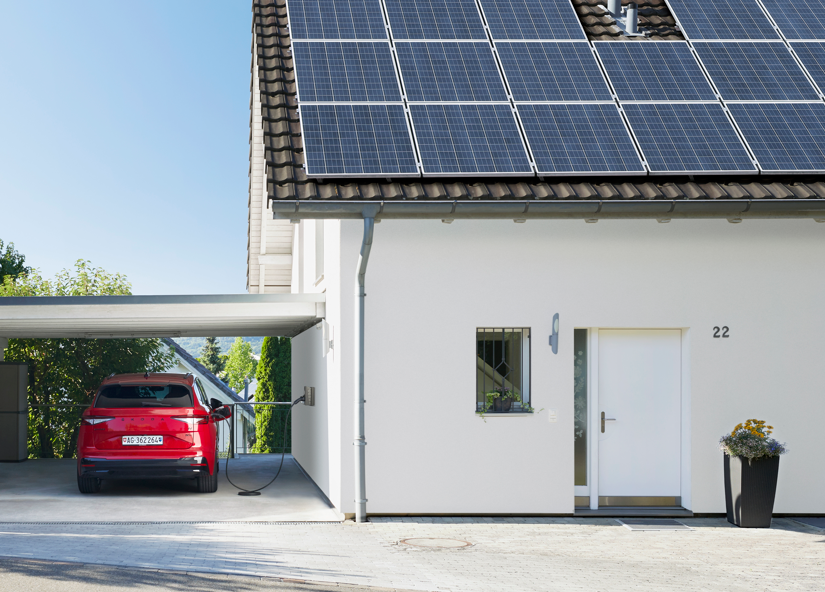





%5B49%5D.avif)


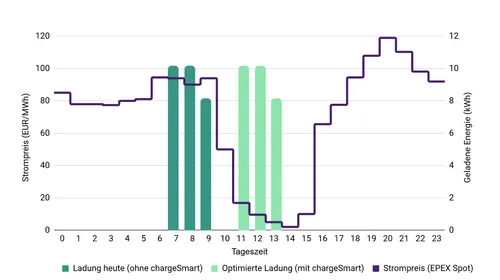
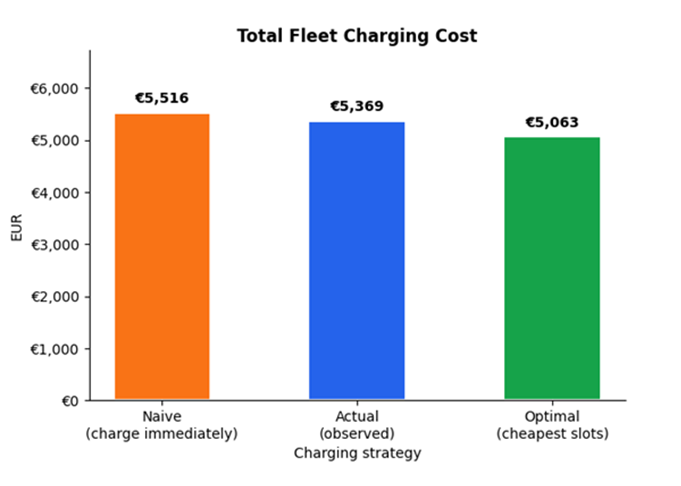
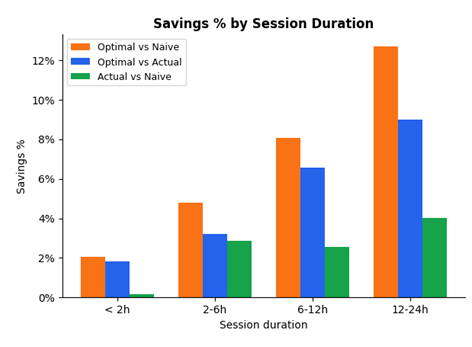
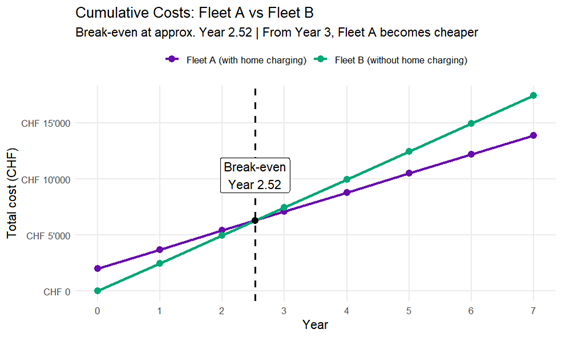
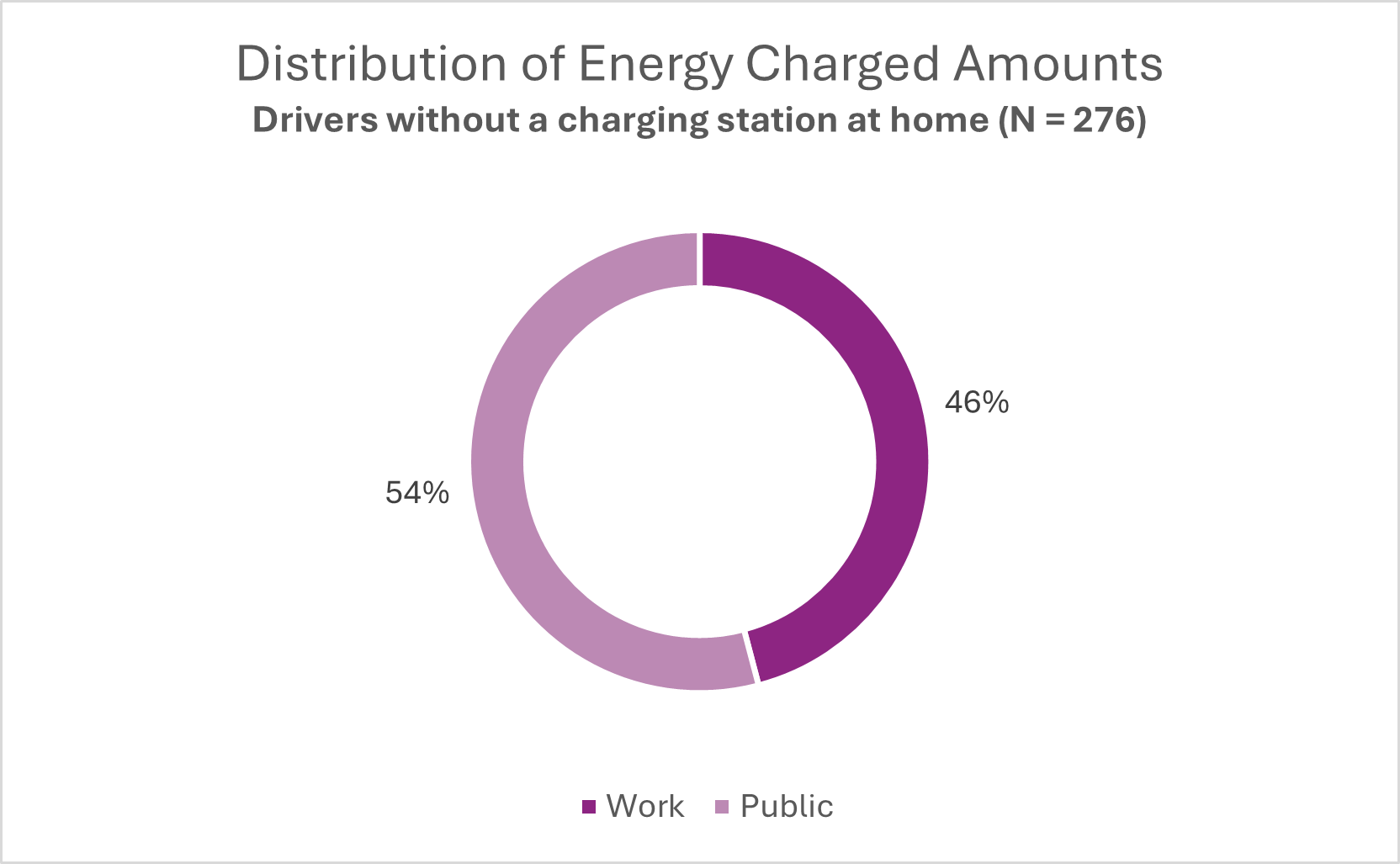
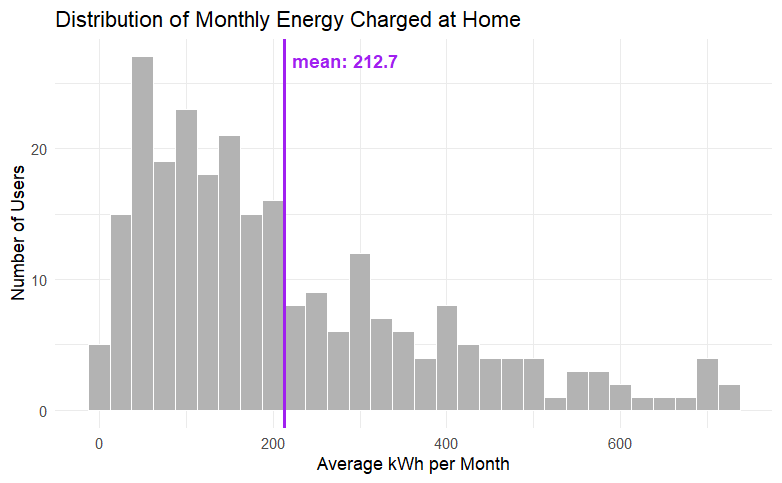
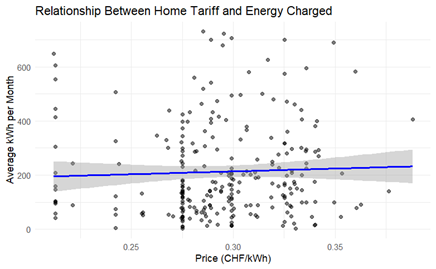
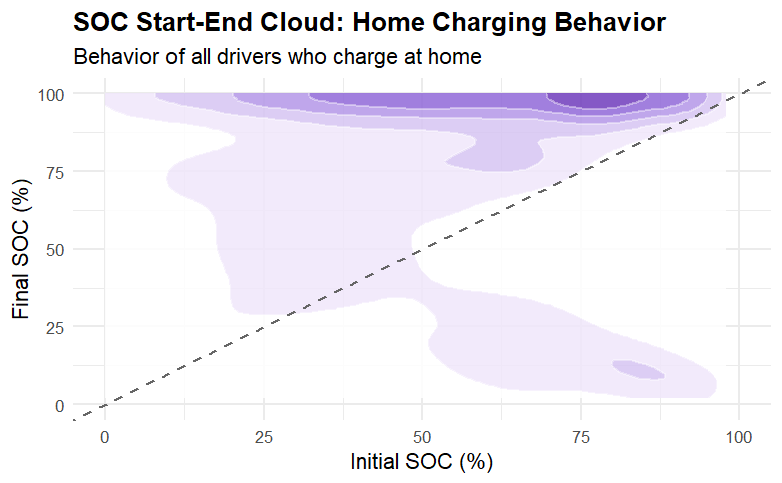
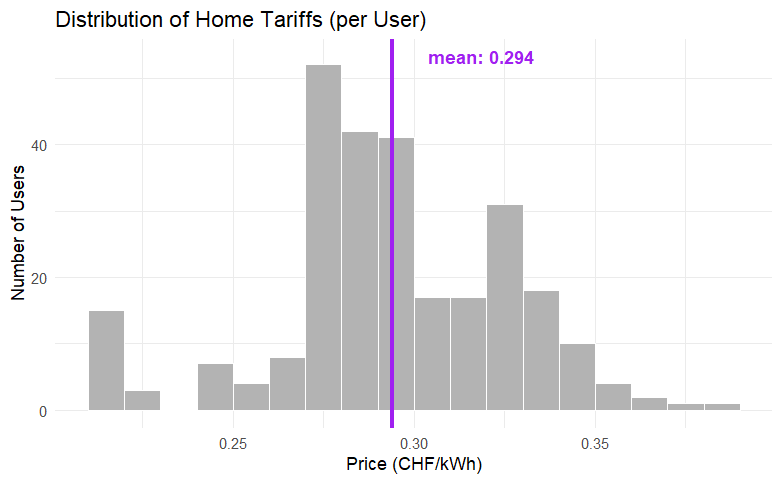
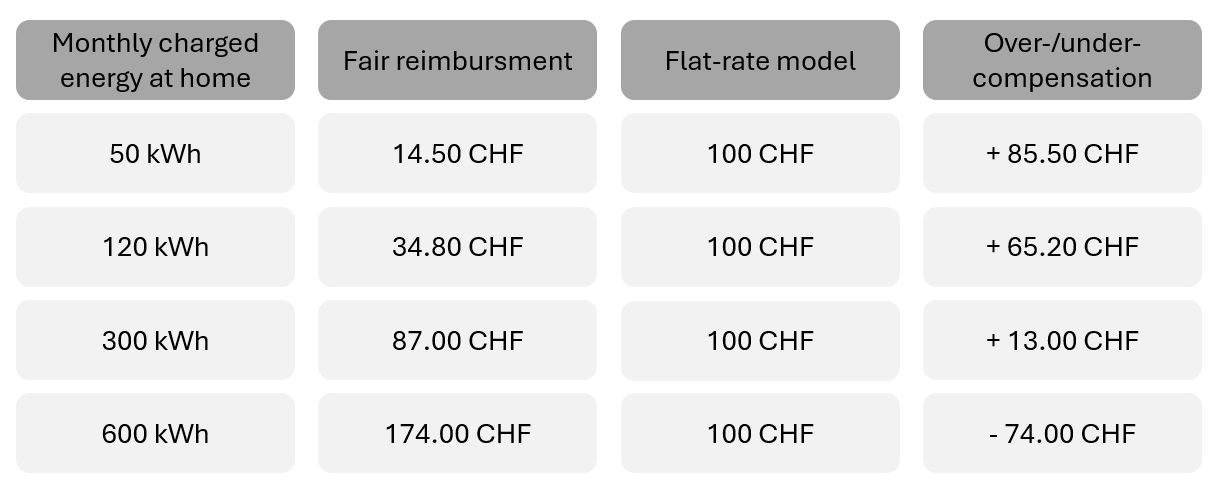
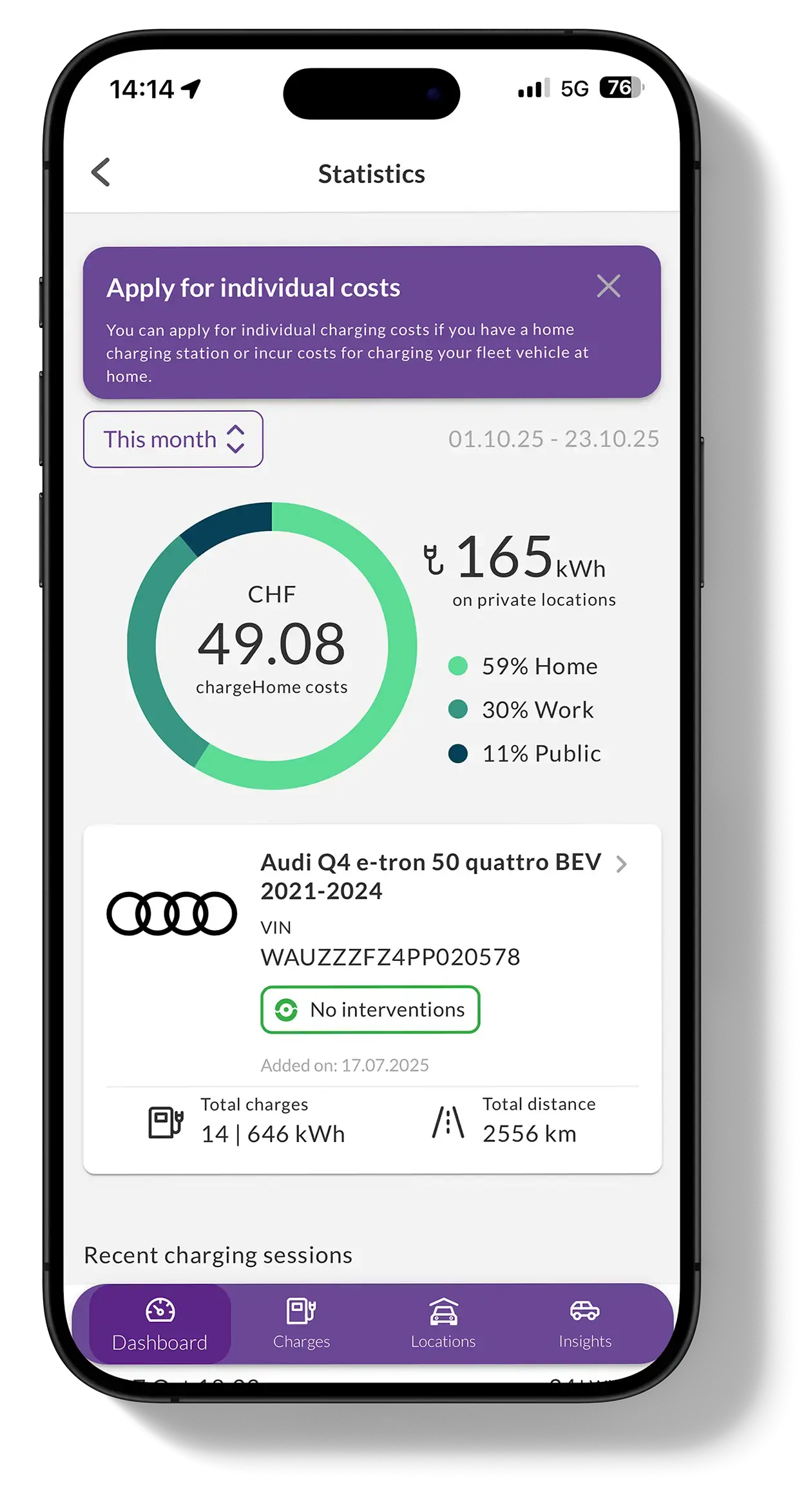
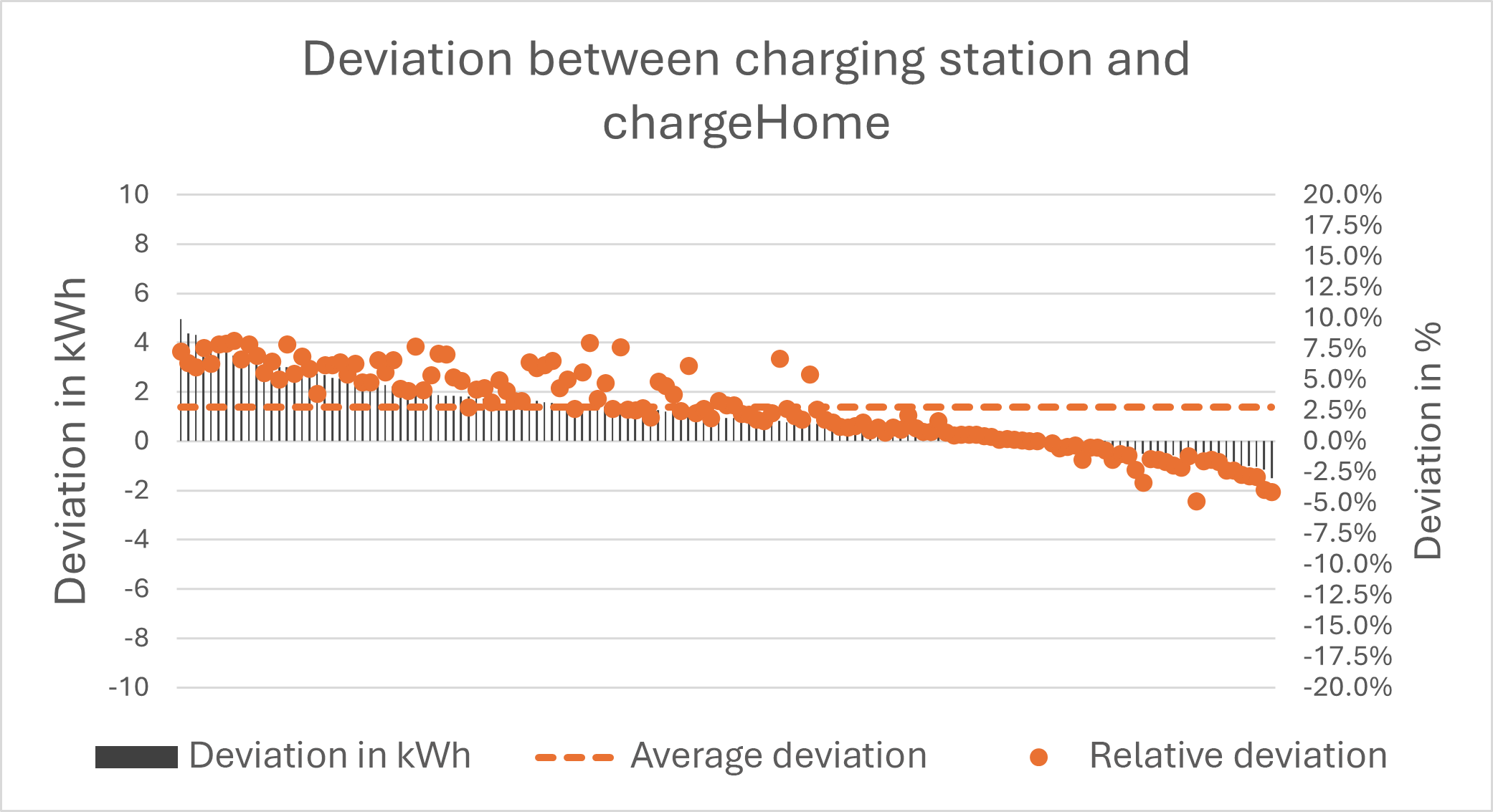

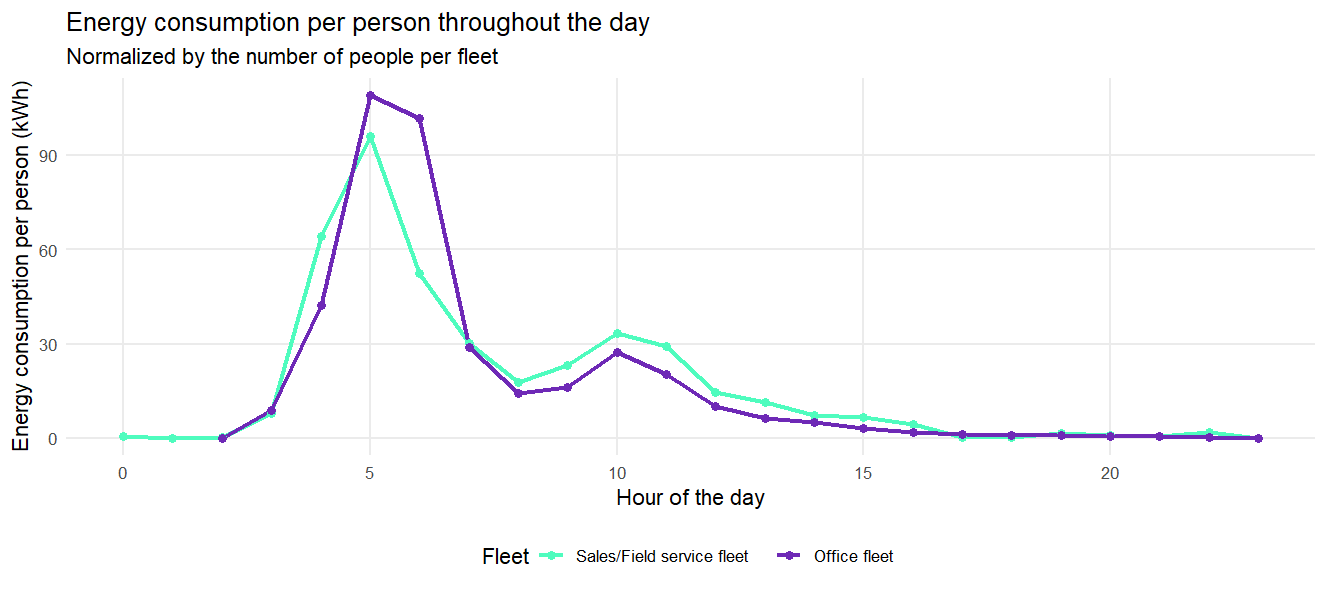
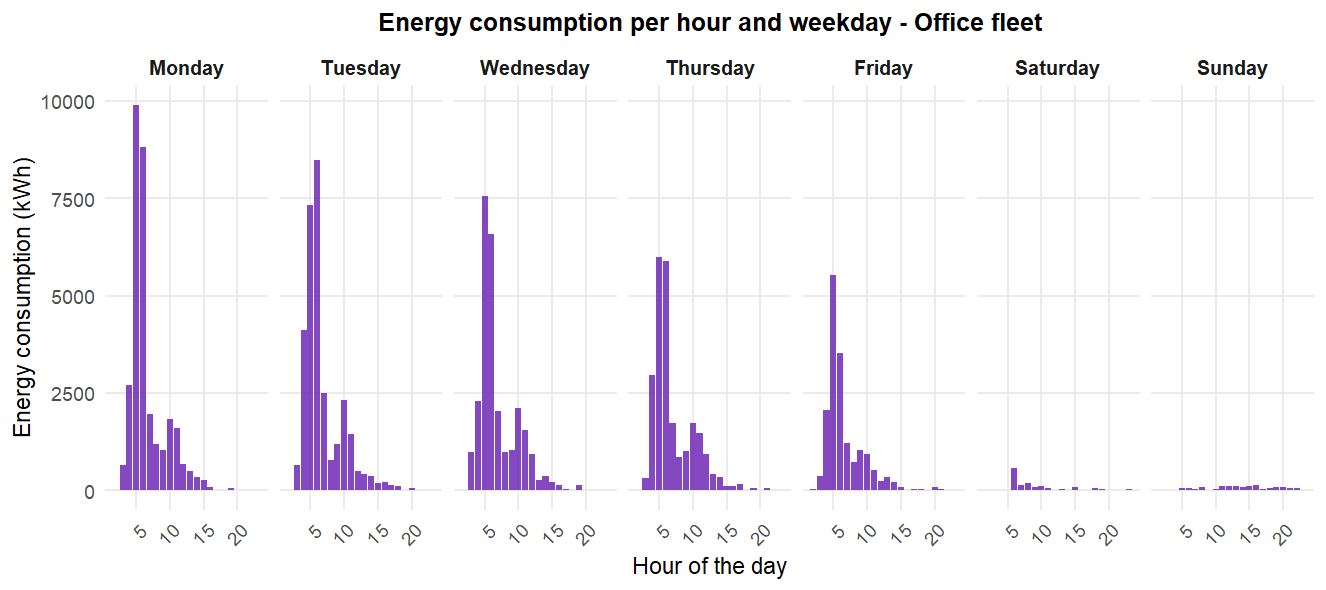
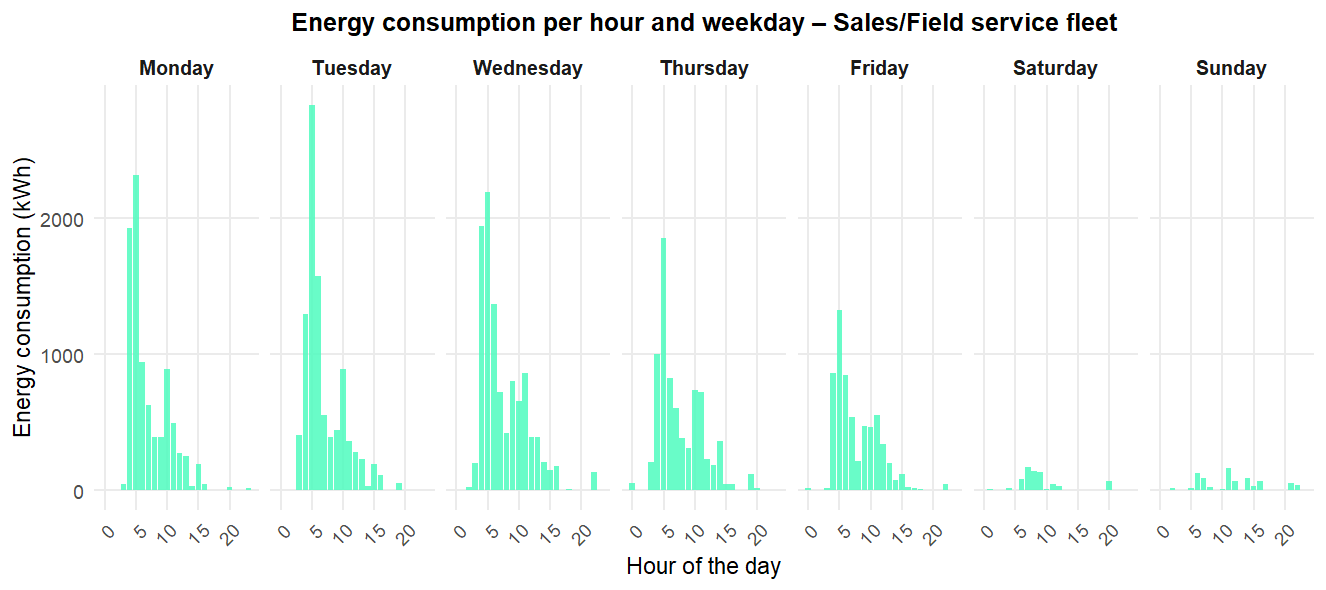
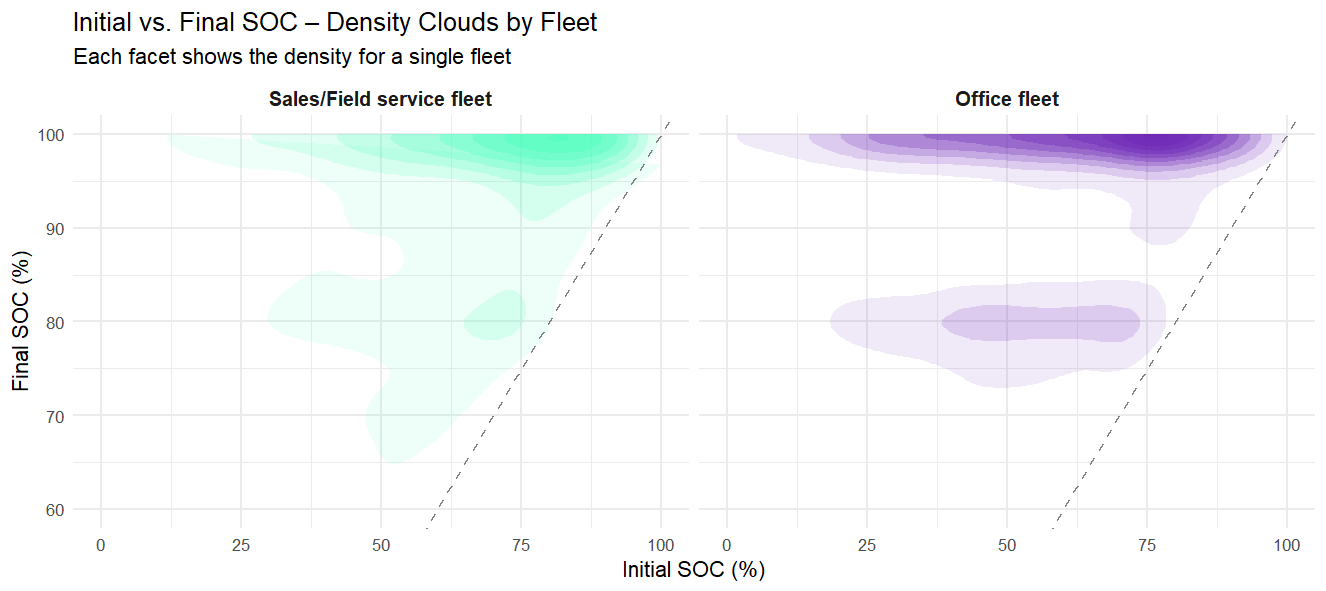
.png)
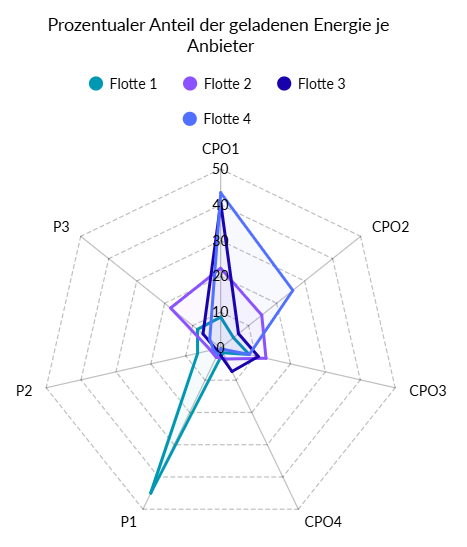
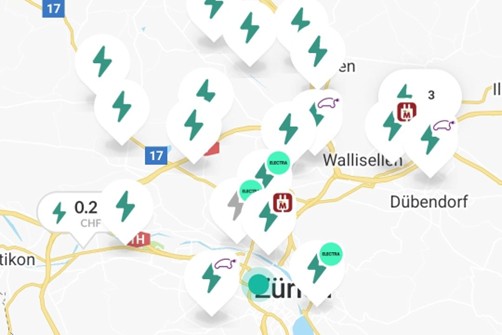
.png)